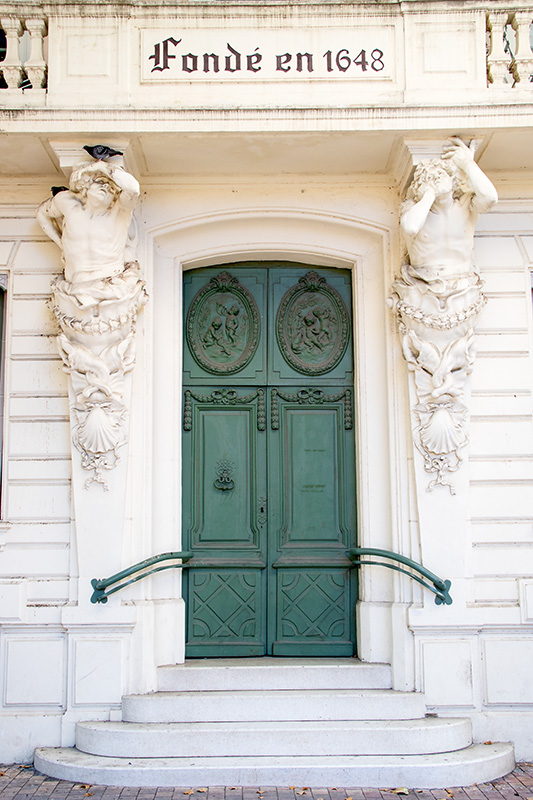
 On leaving Carcasonne we did not have too far to travel to our next stop in Narbonne, a pleasant village with Roman roots, an unfinished Cathedral, and a thriving indoor marketplace.
Our first stop with our local guide was at the Roman Horreum. An underground warehouse or storage facility dating to the 1st century A.D when Narbonne served as a major port and capital of the largest Roman Povince in Gaul. The caves were interesting but not very photogenic.
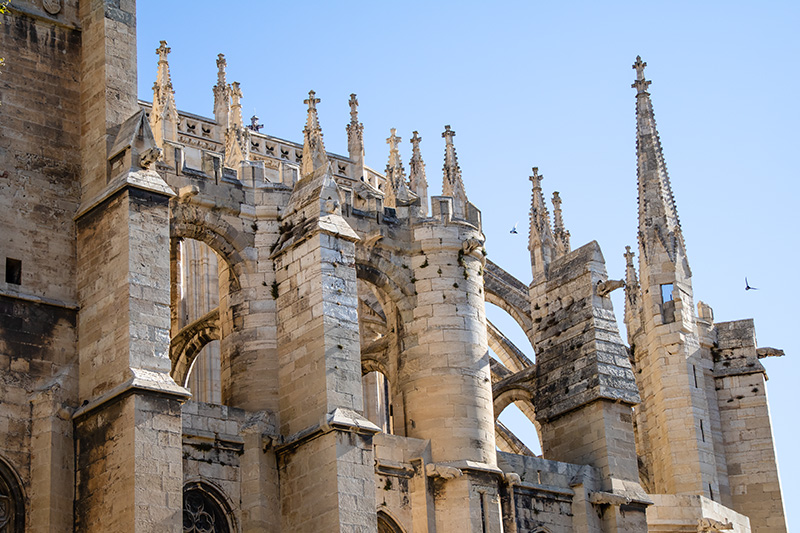 Next we made our way across the street to a Cathedral which was begun in 1272 and never completed so that it is lacking the impressive facade of most such structures but still sports flying buttresses and turrets, not to mention some
 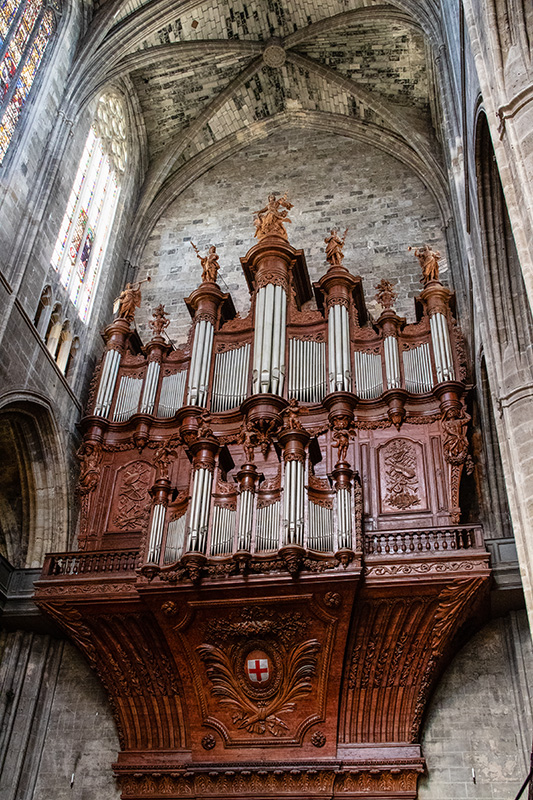 newly cleaned and restored gargoyles. An organ dating from the 18th century is also an impressive feature.
Our final stop before lunch at a nearby restaurant was the indoor farmers market which featured everything from fish to pastries to wine to fresh fruit. One stall even specialized in Olives.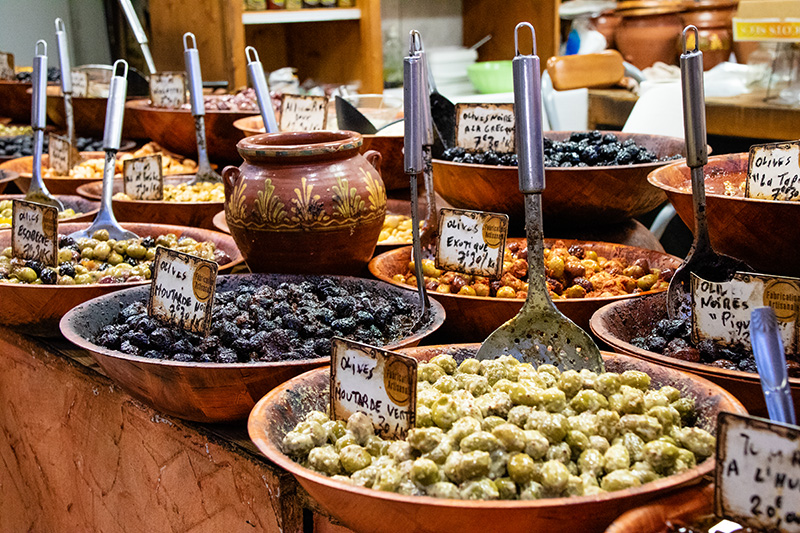
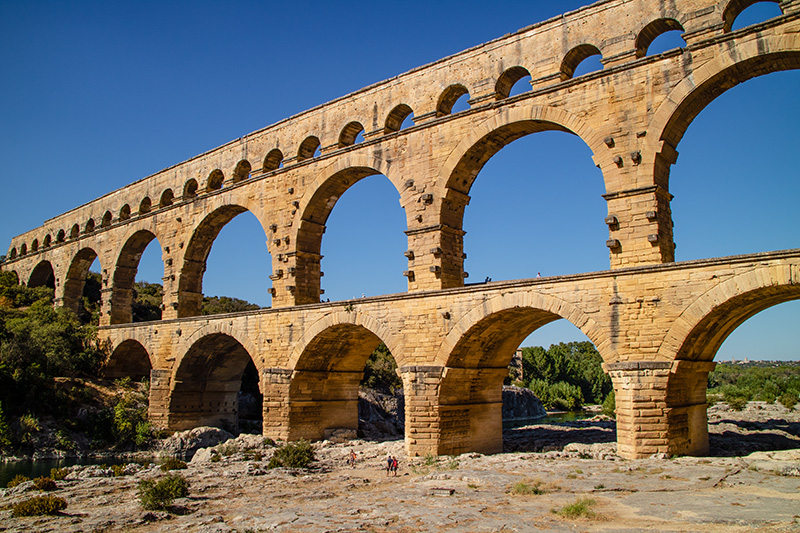
After lunch we reboarded the bus to continue on our way to Arles in Provence. But first a stop at the Pont du Gard, the famous Roman Aqueduct near Nimes. It is hard to image the effort involved in building such a massive structure without benefit of modern machines and equipment. The aqueduct is believed to have served for 400 to 500 years. It continues to stand tall at 160 feet as the highest structure of it’s kind built by the Romans. If you look carefully you can see the people on the bridge and on the ground to get an idea of the scale.