I really don’t have a lot to show for the first two days of the Road Scholar Program. We started Tuesday at the Heard Museum in Phoenix which featured art and culture of the Indians of the Southwest. This mural shows the many tribes dancing together.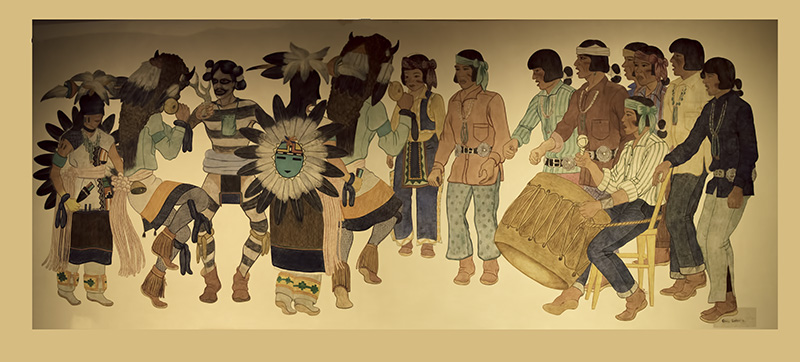
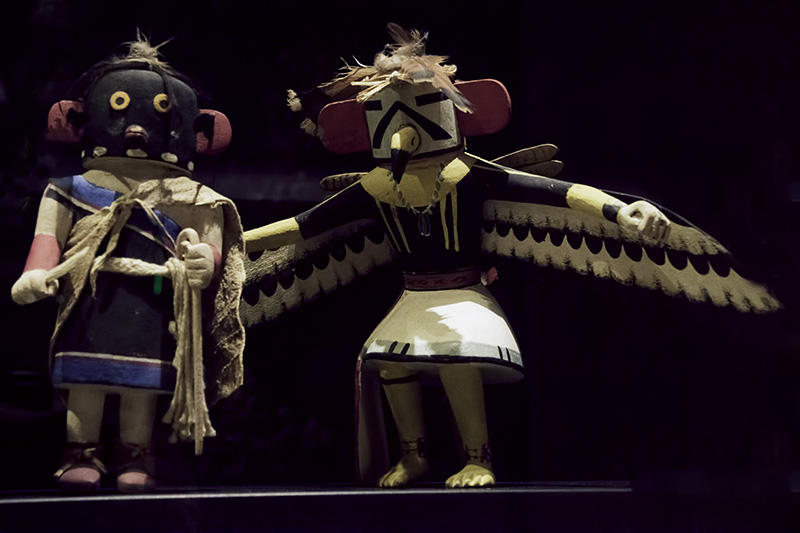
It was dark in the museum and I tried to photograph some of the baskets, pottery and jewelry but with little success. I did come up with one halfw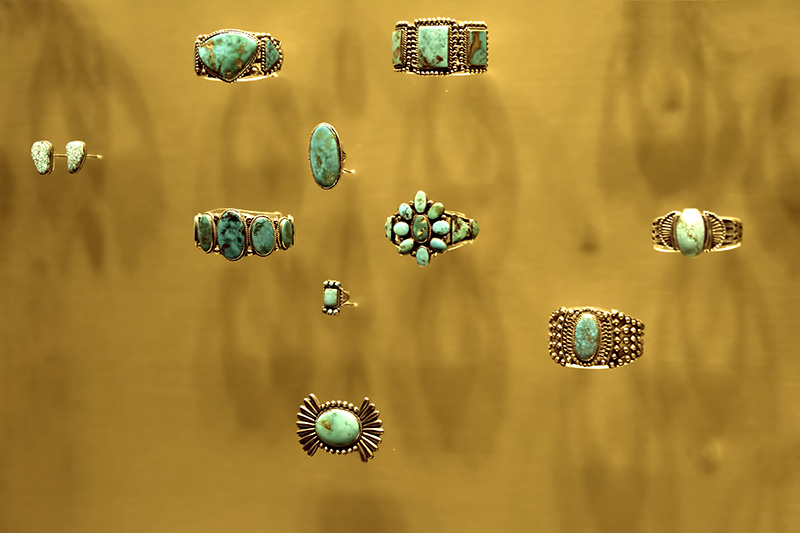 ay decent shot of some Hopi Kachinas and some Navajo jewelry. After lunch at the museum we proceeded to make our way to the Hopi Second Mesa through snowy Flagstaff. It was a 5-hour bus ride and visibility was not too good due to the rain and snow. It has been a dry year here and everyone is glad for the moisture though it did literally put a damper on our activitie
 s.
s.
I may have mentioned that absolutely no photography is allowed on Hopi lands. It was explained to us that the reason is because in the past pot hunters have used photographs to locate sacred objects which have been stolen from the Hopi resulting in an irreparable loss to their culture.
We were allowed to take photographs during a demonstration of Hopi 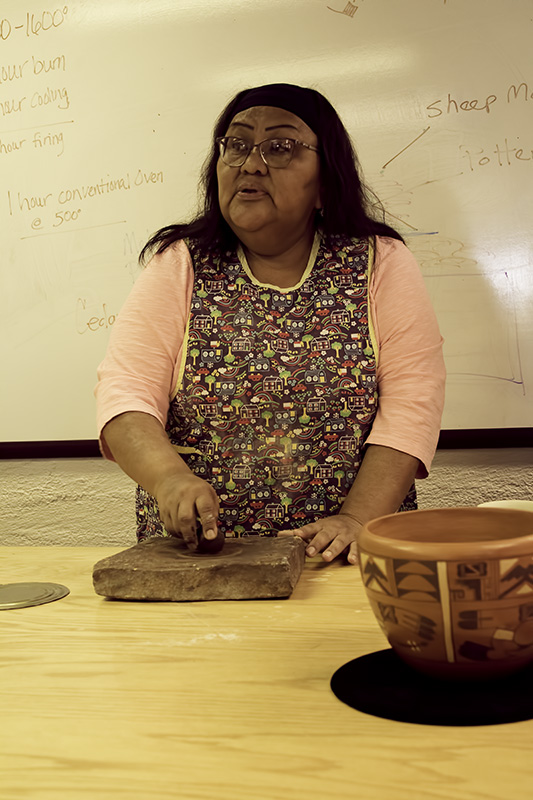 pottery making Wednesday morning. Their pots are made with coils rather than turning on a wheel and they are fired by burning sheep dung in an open fireplace rather than a kiln. Designs are painted onto the pots before they are fired and artist needs to understand how the various pigments will change during the firing.
In the afternoon we visited Old Oraibi Village, said to be the longest continuously inhabited settlement in North America. It was a little sad to see that many of the old structures had been torn down and replaced with concrete block houses. Though the village does not have electricity or 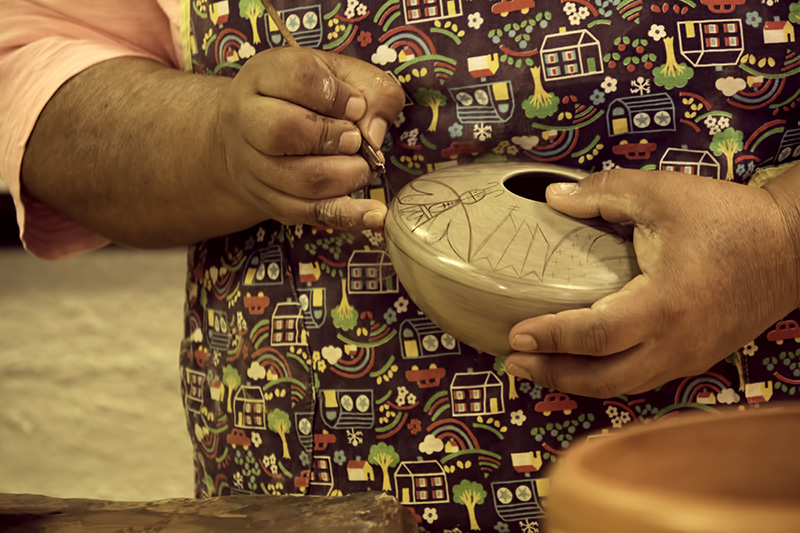 indoor plumbing there were solar panels and satellite dishes in evidence on many of the homes.
The Hopi are an interesting people and I would like to know more about them. Our guided explained that Hopi is not really the name of a group of people but a way of life. The Hopi separated themselves from other Puebloan groups in order to pursue a more peaceful lifestyle. On our last day on Second Mesa we were treated to a traditional Hopi meal prepared by our Hopi guide’s wife.