
Our second day in Japan was all about Kabuki theater. We started the morning with a lecture about the art of Kabuki which was developed as an artform separate from Noh theater about 400 years ago. Unlike Noh, which was intended for the elite, Kabuki was the theater of the common people.
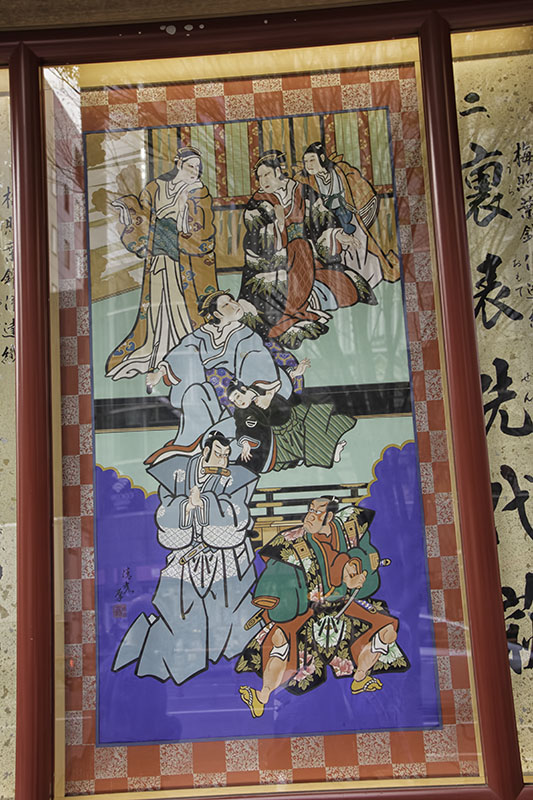 The name derives from Ka meaning song, bu, meaning dance and ki meaning skill or drama. The first Kabuki style plays were developed by a woman but by 1629 women were banned from performing and, unlike western theaters, they have never been allowed back. All the roles in Kabuki are played by men and some actors specialize in performing women’s roles. The white makeup sometimes seen in Kabuki derives from a time when there was no stage lighting, so the faces were painted to make them easier to see.
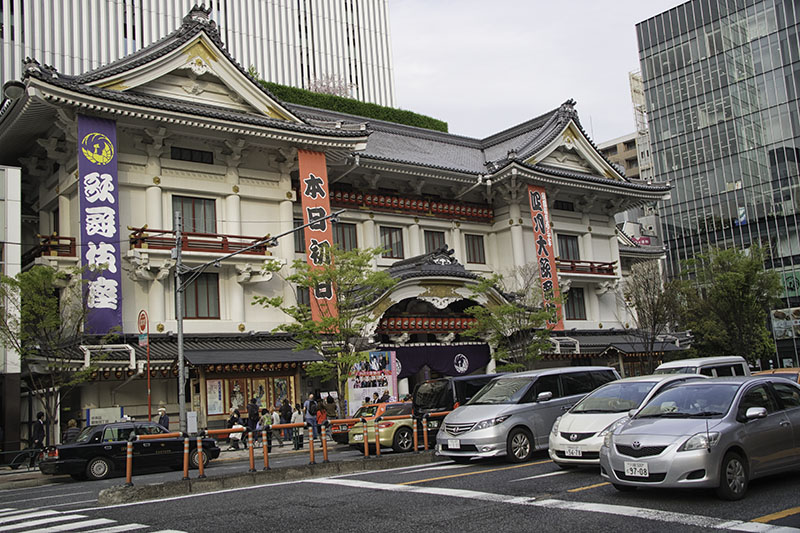 From our lecture we proceeded to the theater with Bento boxes in hand to see the first matinee performance which began a
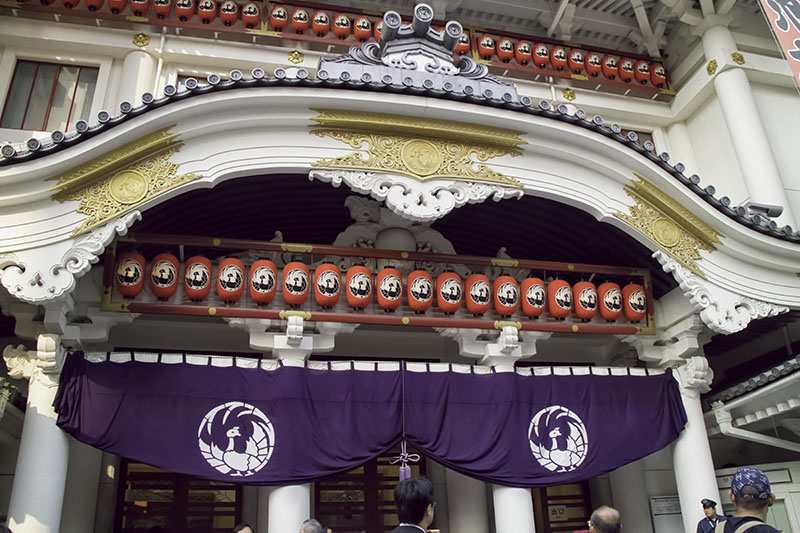 t 11:00am. The Kabuki theater in Tokyo’s Ginza district was rebuilt in 2013 but in the old style. Modern touches such as escalators have been added but the seats are
 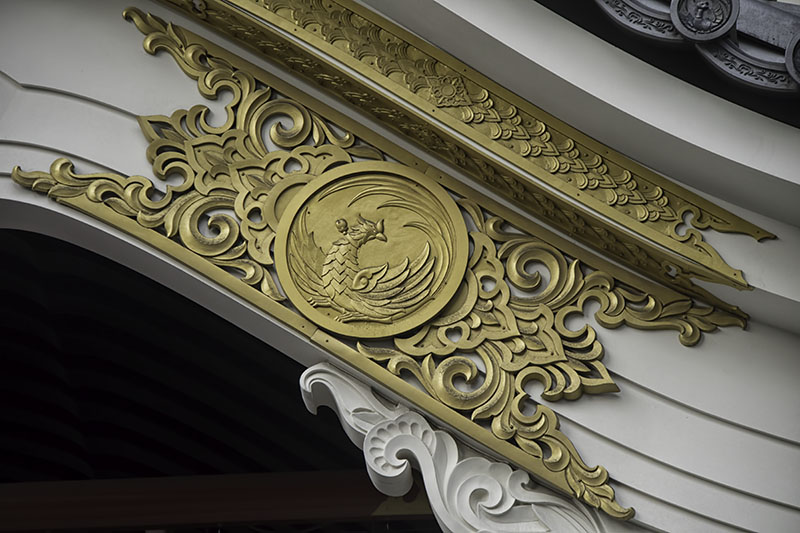 definitely sized for Japanese bottoms. The symbol of the theater is the phoenix and decorative representations are found everywhere.
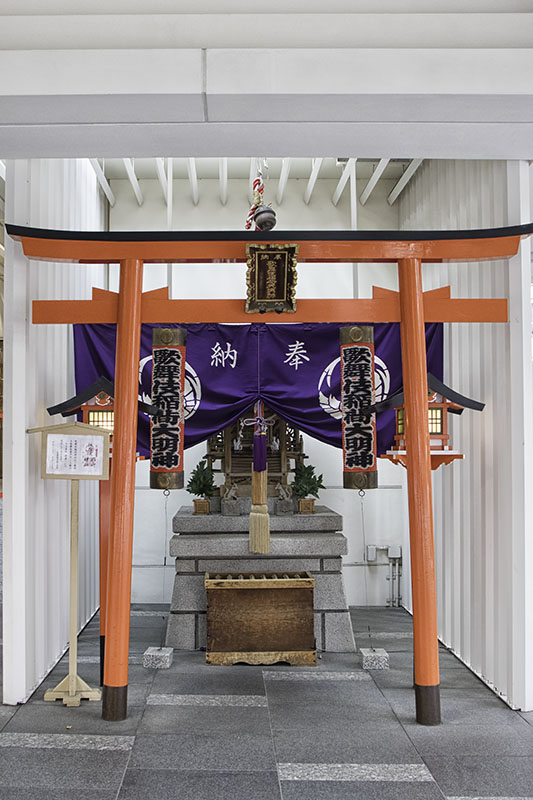
There is also a small Shinto shrine tucked away in a corner in front of the theater for actors to pray for a successful performance.
We were, of course, not allowed to take photographs during the performances but I was able to take one of the stage and curtain during intermission. The first 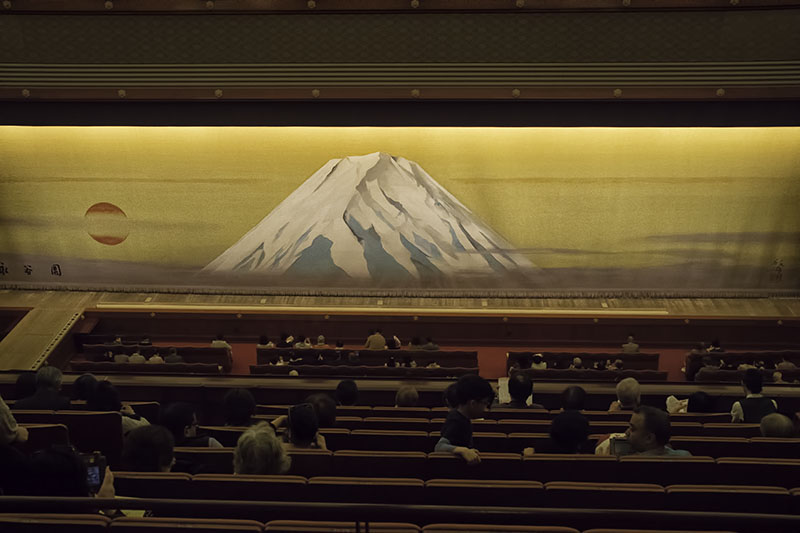 play lasted about an hour and was about negotiations for surrender of the Shoganate in 1868. Although we had a translating device the speeches were longwinded and it was hard to keep up. There was not a lot of action on stage, just actors in samurai costume talking at length.
During intermission we enjoyed our bento box lunch which consisted of rice and a lot of things I didn’t recognize and most of which were not to my taste. I felt like I needed a translator for lunch.
The second play was more traditional Kabuki style, meaning it is stylized 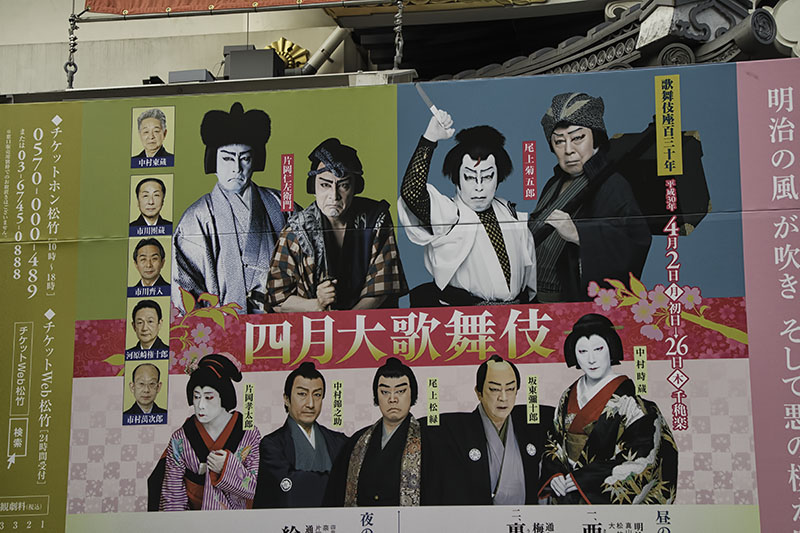 and not too realistic. The second act was most interesting though some of the scenes went on too long. It didn’t help that our translation device only gave a synopsis of the action and not a word for word translation. Still we could follow the story. Not unlike a Shakespearean tragedy, there were a lot of dead bodies by the end of the play, which ended about 4pm with two additional intermissions.
All in all, it was an interesting experience but I was a little disappointed that there were not more colorful costumes and wild wigs.
Haiku:
Kabuki actors
White faces and kimonos
History relived