I really don’t have a lot to show for the first two days of the Road Scholar Program. We started Tuesday at the Heard Museum in Phoenix which featured art and culture of the Indians of the Southwest. This mural shows the many tribes dancing together.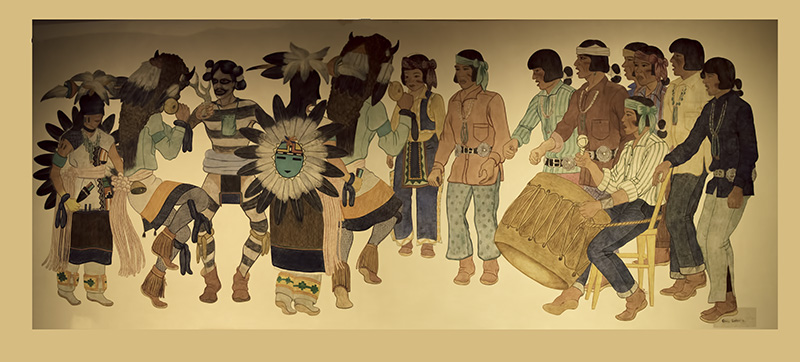
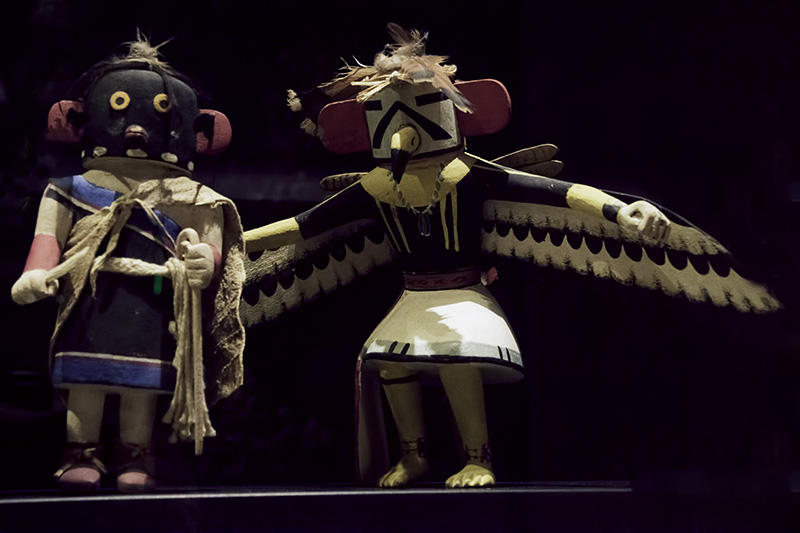
It was dark in the museum and I tried to photograph some of the baskets, pottery and jewelry but with little success. I did come up with one halfw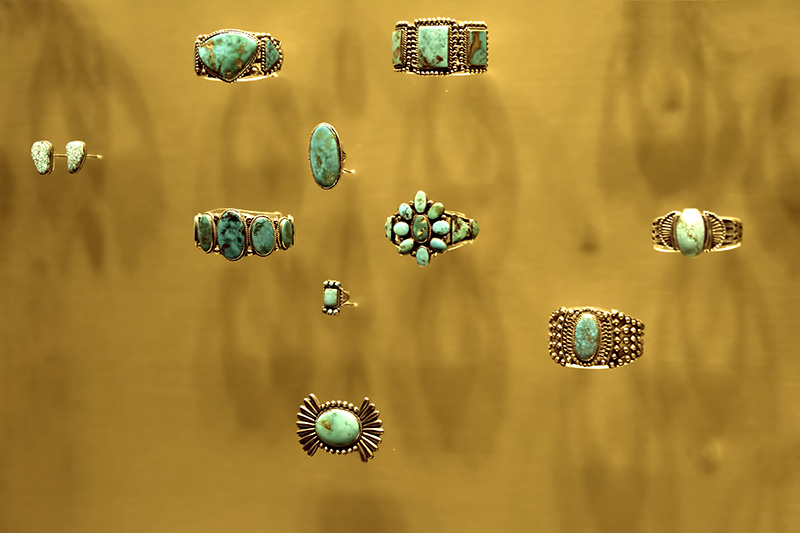 ay decent shot of some Hopi Kachinas and some Navajo jewelry. After lunch at the museum we proceeded to make our way to the Hopi Second Mesa through snowy Flagstaff. It was a 5-hour bus ride and visibility was not too good due to the rain and snow. It has been a dry year here and everyone is glad for the moisture though it did literally put a damper on our activitie
 s.
s.
I may have mentioned that absolutely no photography is allowed on Hopi lands. It was explained to us that the reason is because in the past pot hunters have used photographs to locate sacred objects which have been stolen from the Hopi resulting in an irreparable loss to their culture.
We were allowed to take photographs during a demonstration of Hopi 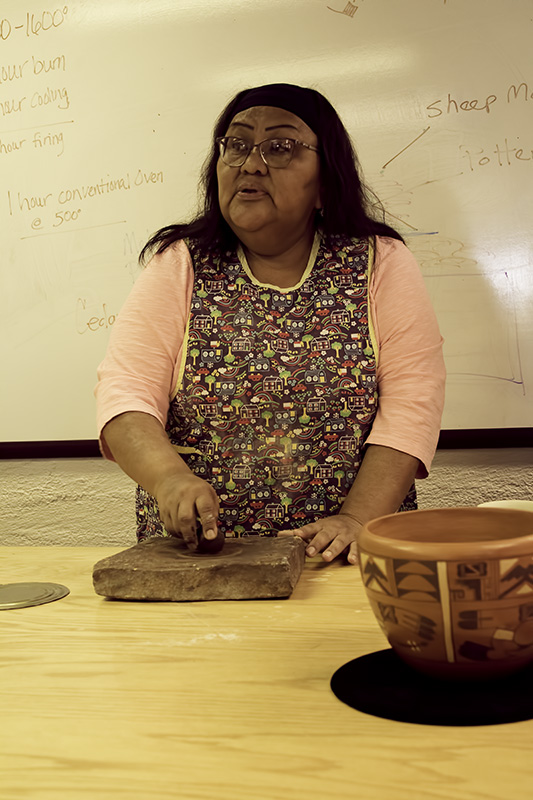 pottery making Wednesday morning. Their pots are made with coils rather than turning on a wheel and they are fired by burning sheep dung in an open fireplace rather than a kiln. Designs are painted onto the pots before they are fired and artist needs to understand how the various pigments will change during the firing.
In the afternoon we visited Old Oraibi Village, said to be the longest continuously inhabited settlement in North America. It was a little sad to see that many of the old structures had been torn down and replaced with concrete block houses. Though the village does not have electricity or 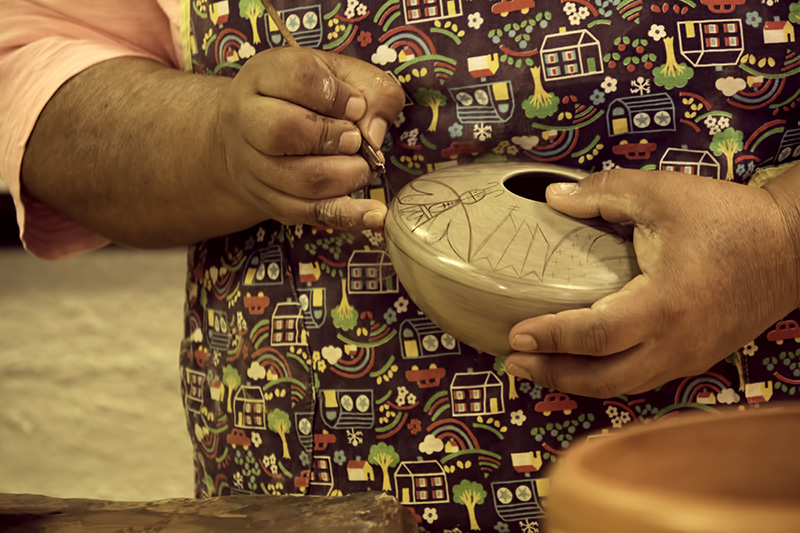 indoor plumbing there were solar panels and satellite dishes in evidence on many of the homes.
The Hopi are an interesting people and I would like to know more about them. Our guided explained that Hopi is not really the name of a group of people but a way of life. The Hopi separated themselves from other Puebloan groups in order to pursue a more peaceful lifestyle. On our last day on Second Mesa we were treated to a traditional Hopi meal prepared by our Hopi guide’s wife.
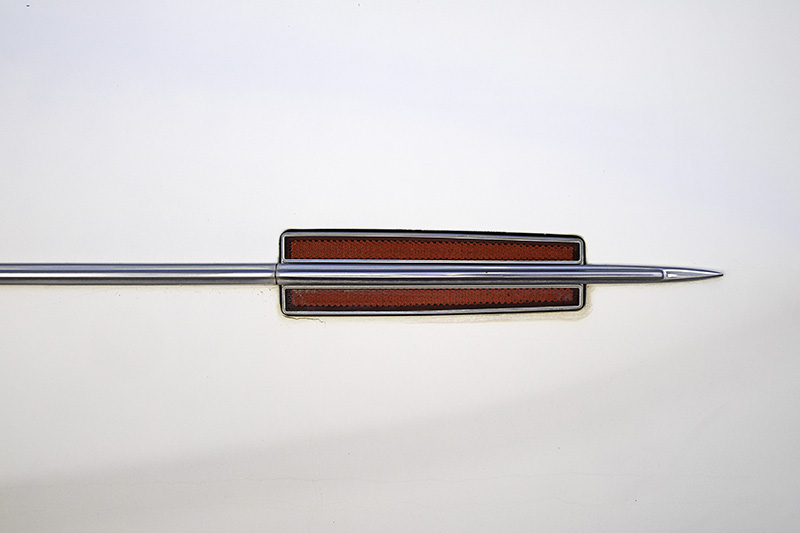 ay was all about Route 66! There is a stretch of the old highway now maintained by the State of Arizona as AZ66 which veers far away from the interstate and passes through some towns which have dedicated themselves to preserving the history of the iconic route. I had the most fun just looking for abstracts of parts of old cars and trucks.
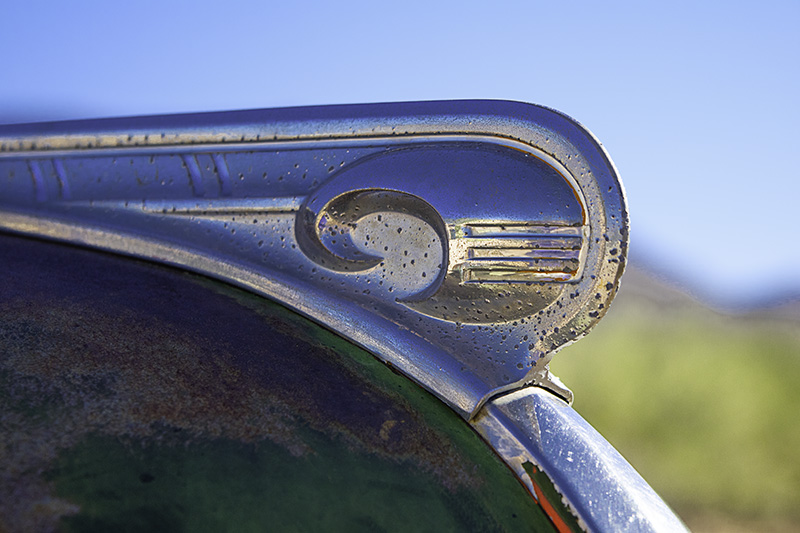
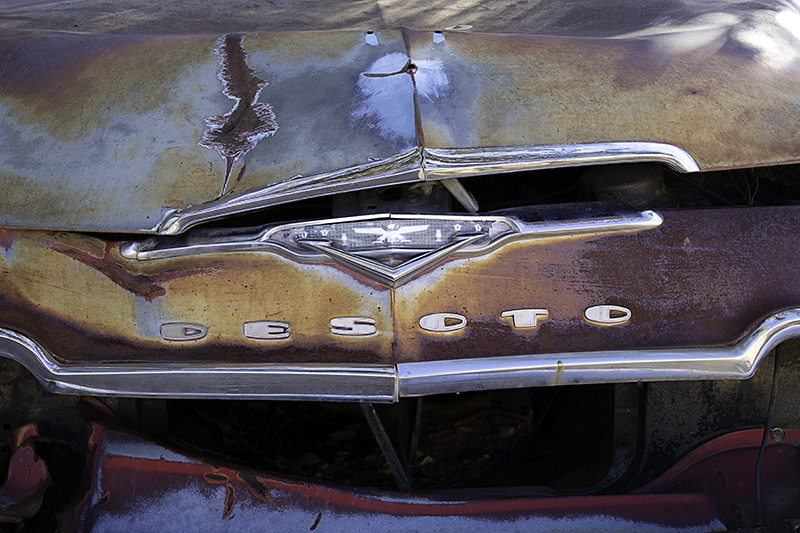 The next two, a wrecked DeSoto and the hood ornament of a dodge ram truck from the 1930s were found at the Hackberry General store which is a treasure trove of old cars, coca cola signs, gasoline signs and even an old tractor or two.
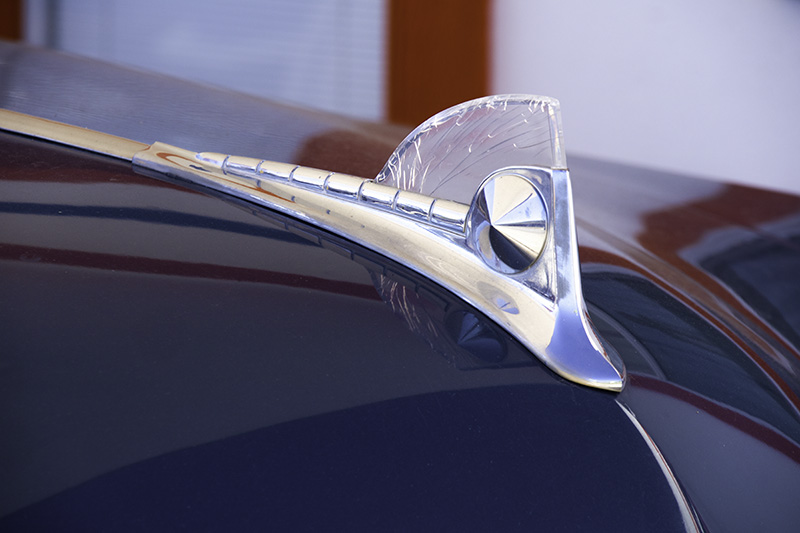
 a sneak peak at Williams where I will be staying on the first night headed back. Williams is a city that has built its economy on its erstwhile position on Route 66 and its proximity to the Grand Canyon. If you are looking for Route 66 kitsch, you will find it in Williams. I found this 1950s ford reflecting its red and white restored gas station for a great hood ornament abstract.
 group this evening. I’m looking forward to letting someone else do the driving for a week. I was disappointed to learn that absolutely no photographs are allowed on the Hopi Reservation where we will be going tomorrow but at least I will be able to get some shots at the Heard museum before we head back north. Assuming, of course, we will be able to head back north given the forecast of snow in Flagstaff.
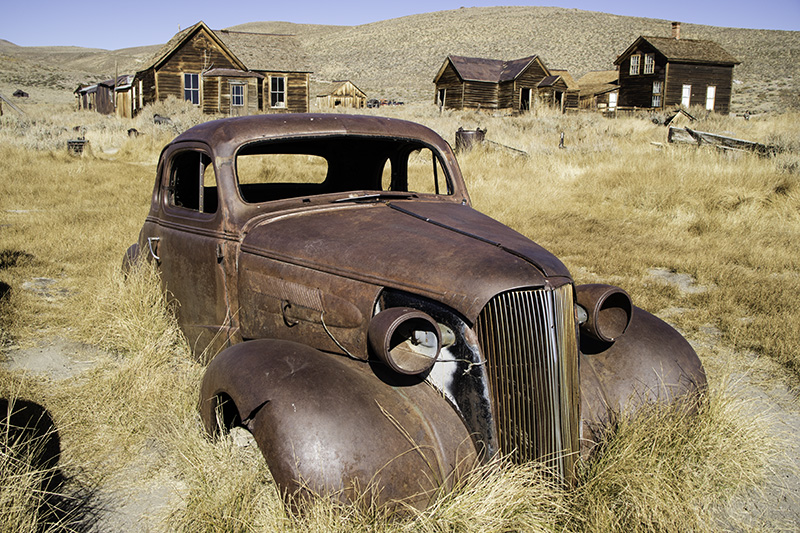 Bodie, California, one of the best ghost towns ever, has been on my photographic bucket list for at least 25 years. Today I finally got there and it didn’t disappoint. Well, not too much. Unfortunately, it has gotten very popular and unfortunately the timing of my trip put me there on a Saturday so I didn’t exactly have the place to myself.
 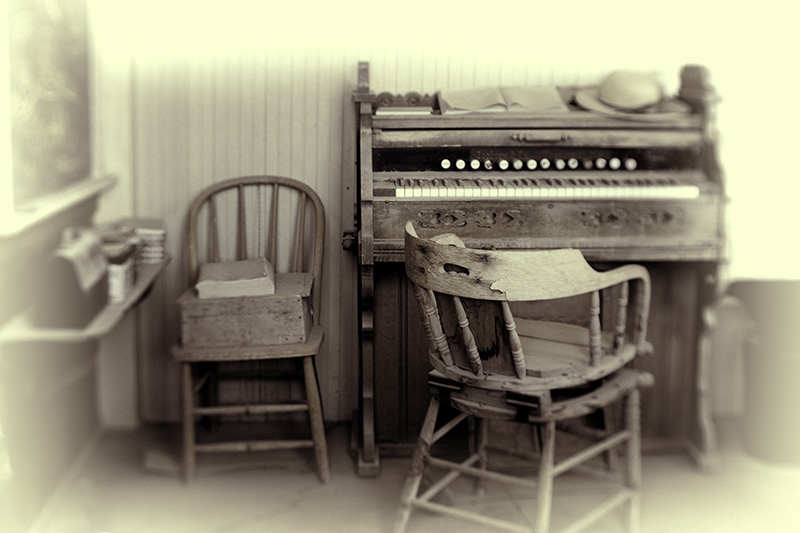 car in line at 8:45. By the time I left around 11:30 the parking lot was full, there were about 10 cars lined up to pay the entrance fee and I must have passed at least 20 more coming up on my way down. There was a photography workshop there getting in the way of many of my pictures but still I persevered and got some good shots in spite of it all. I am thinking of giving it another go on the way back to catch the afternoon light and see if it is a little less crowded on a weekday.
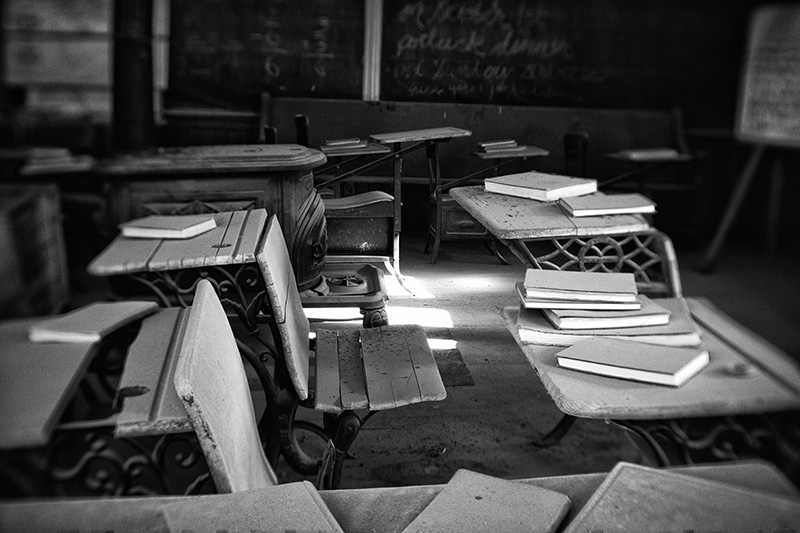 I haven’t yet finished processing my pictures but I have enough to give you a taste of Bodie. Gold was first discovered here in 1859 but it wasn’t until the 1870s that a vein was found that made large scale mining profitable. Bodie boomed for about 10 to 15 years but by the 1890s the mines began to play out. A couple of fires put a few more nails in it’s coffin and by the 1940s the town was deserted and most of the land fell into the hands of the family that owned the bank.
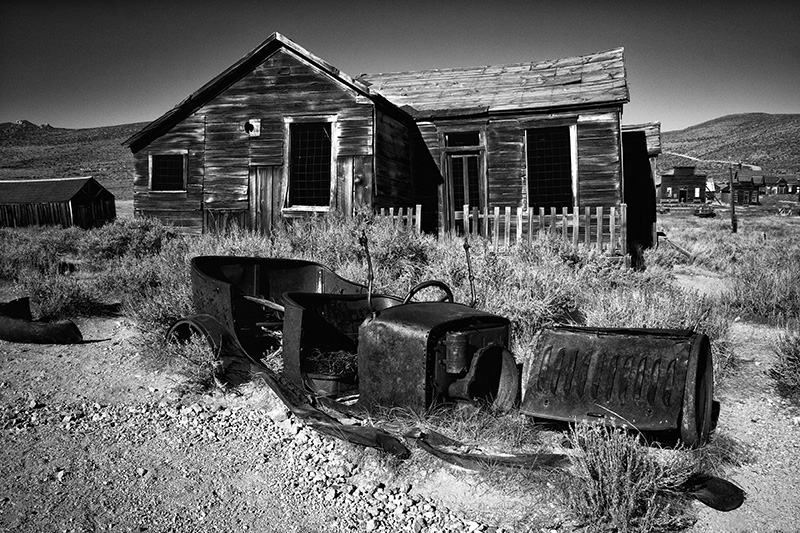 assumed an attitude of what they call arrested decay. Things have been left as they were when the residents left town and the rangers repair but do not restore the buildings. The cold dry climate at over 8000 feet elevation helps to keep Bodie somewhat intact.
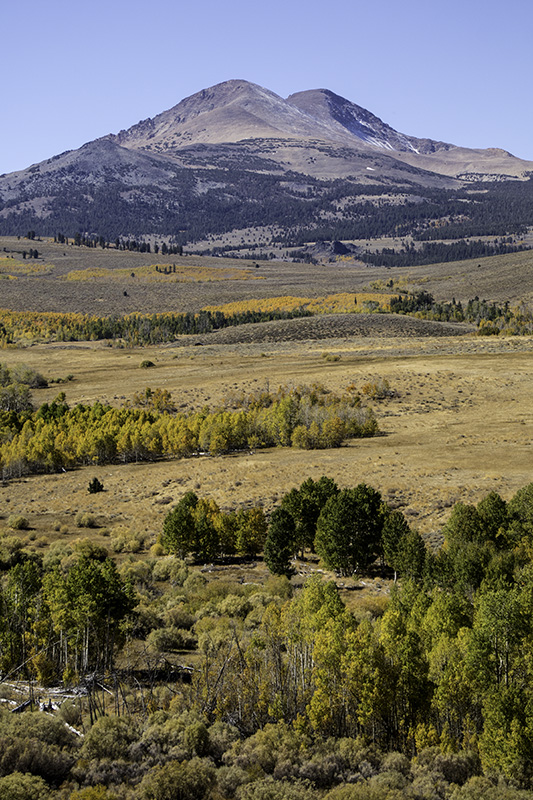 Leaving Bodie to make my way to my next stop in Bishop I saw a lot of aspen, some past peak, some beautiful but surrounded by sagebrush so not very photogenic. I only found one patch worth stopping for and somehow the picture just doesn’t capture what I was seeing. I also tried to stop at Mono lake put I didn’t have the right parking permit and I couldn’t find where to get one and since it was mid day I didn’t expect the photos would have been that great anyway.
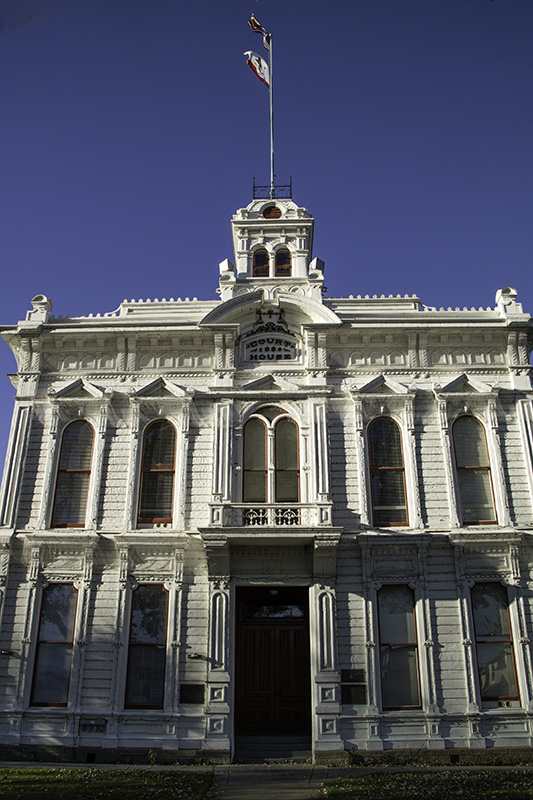 After a long hard day of driving I ended up in Bridgeport, California without significant incident. Fortunately, I think this will be my longest day of driving the whole trip. After a short rest I took the M3 out for a walk to see what I could find. It turns out my motel is right next door to the Mono County courthouse whose architecture I would have to describe as Italianate meets Greek revival. It is a pretty building, in spite of its schizophrenic design. Aside from being the county seat Bridgeport’s main claim to fame is being the gateway to Bodie, California’s most famous ghost town. That is, after all, why I am here.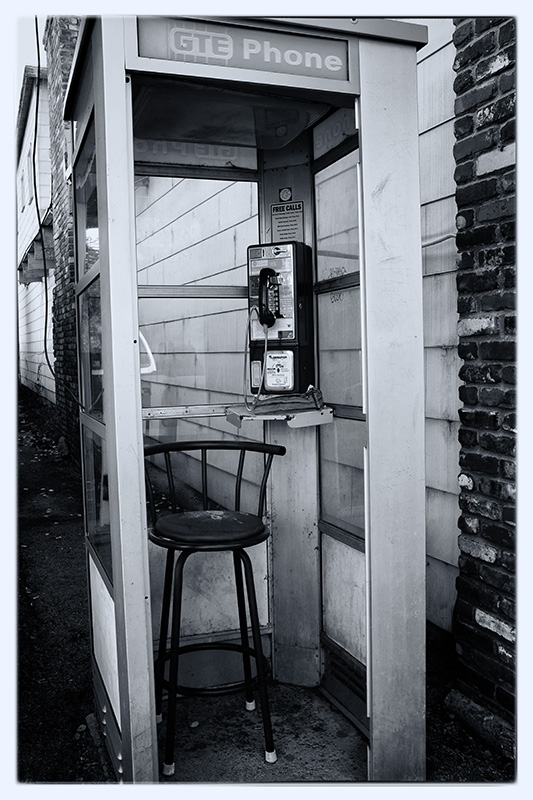
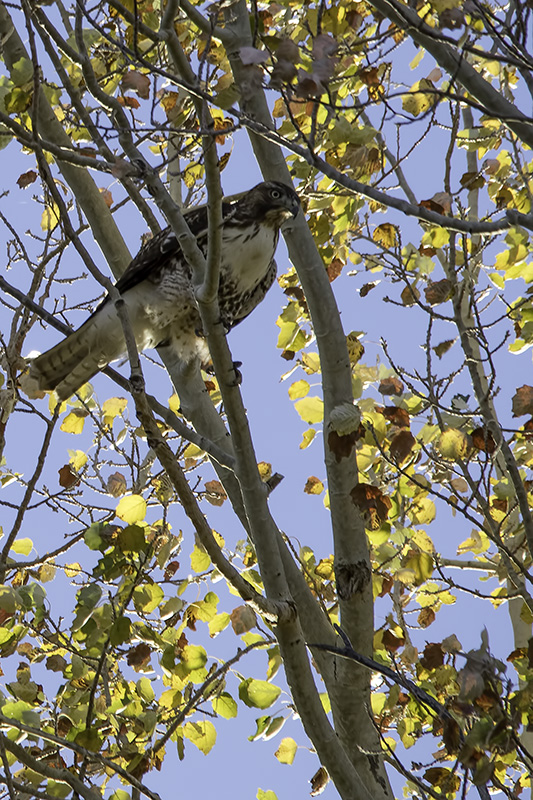 historic buildings, neon signs, and old mining equipment I headed down a side street where this hawk cruised into a tree right beside me. Yes, I did have to do some serious cropping as I only had a 18-150 zoom lens with me but I think he came out pretty well, all things considered.
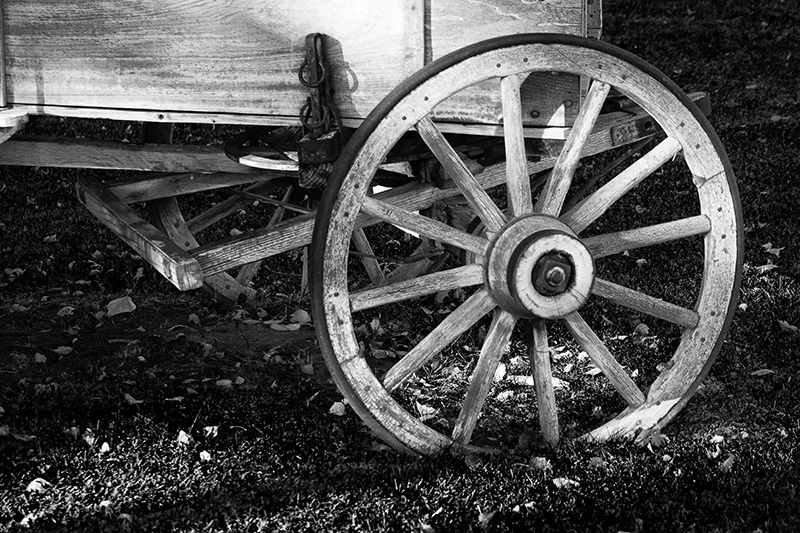 useum which, sadly was closed. But there was an assortment of mining and agricultural equipment from days gone by outside. None of the photos made the final cut for tonight though. I preferred this wagon wheel I found back at the motel.
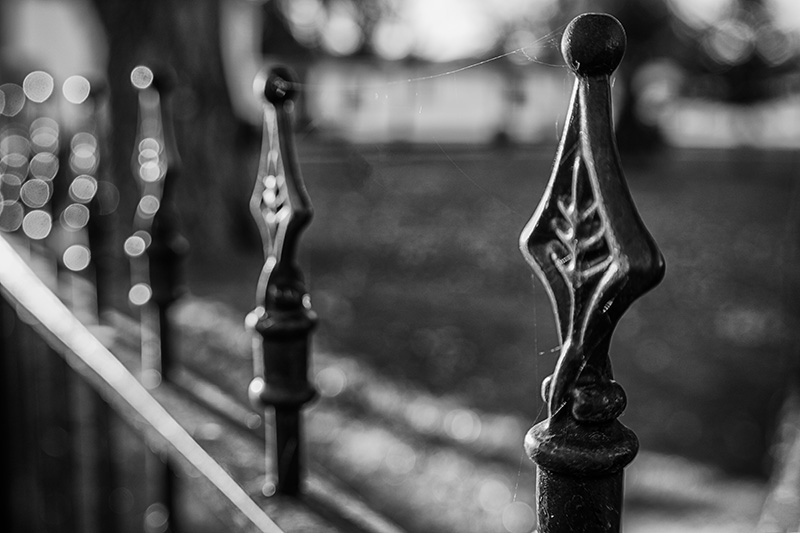 e mood tonight. Maybe it is just the subject matter. It turns out the courthouse plays bells every half hour. I hope this doesn’t go on all night as I need to get my beauty sleep before heading up to Bodie tomorrow.
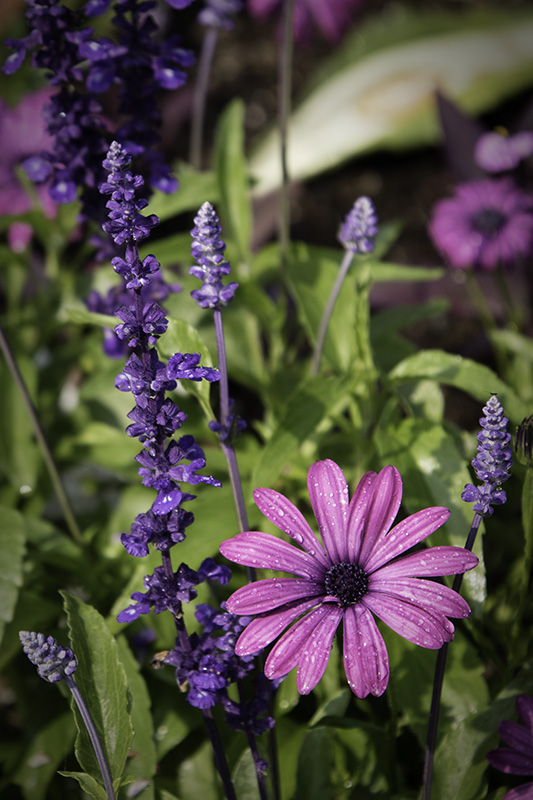 Today started with a visit to the Van Dusen Botanical Gardens which have been built on the site of a former golf course. I think it was the best garden we have seen yet. There were ornamental beds, a rose garden, a pond with a peninsula with species from the Southern Hemisphere, a vegetable garden highlighting the species that do well in this climate. We had a guided tour which had the advantage of imparting a lot of information but the disadvantage of not allowing enough time for creative photography. I did manage to get some good pictures, but I am jonesin’ to try out my artsy lenses and that requires a little more free time with the flowers. We still have three more days of gardens though so maybe I will manage it yet.
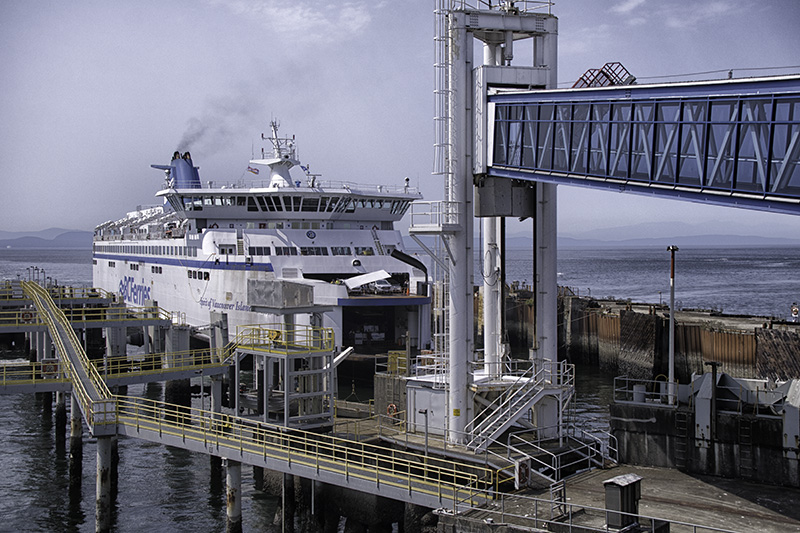 Victoria. We were a little late getting in but otherwise all went smoothly. On the bus ride from the Ferry terminal to the hotel we had a lecture on the history of Victoria. I don’t think I slept through too much of it.
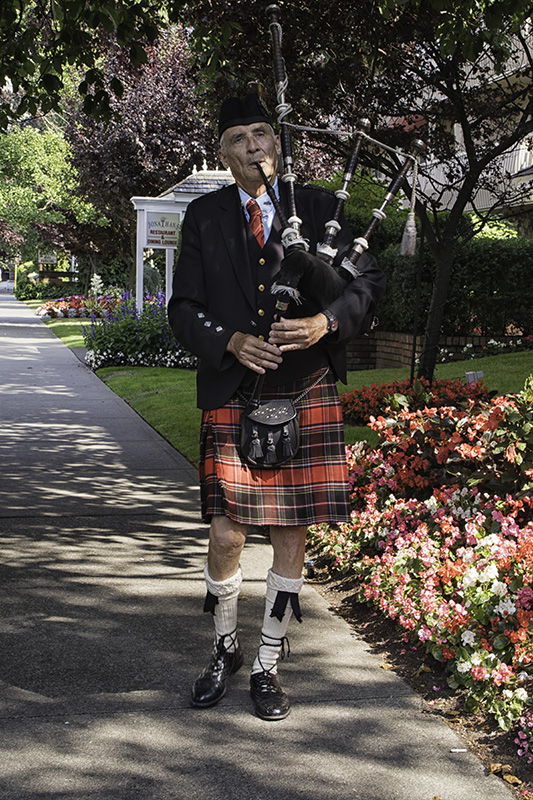 We are now ensconced in the Royal Scot Hotel where we were welcomed by a real live bagpiper. My hotel room is larger than several apartments I have lived in over the years. The salmon dinner at the hotel tonight was very good but the service was a bit sketchy.
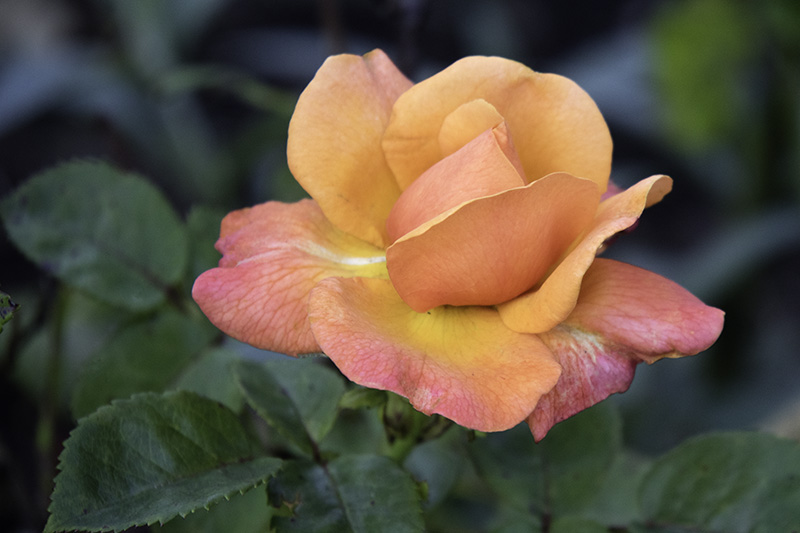 Today we set out with a guide from the Ecology Society to tour Stanley Park. Our first stop was the rose garden where we found most of the roses in decline but a few late bloomers looking pretty good. There were also ornamental beds lending color to the edges. Next we stopped at Prospect Point where there were more ornamentals and a nice view of the suspension bridge. Then we took a walk in the woods and learned all about hemlocks, Douglas fir and Western Red Cedar the three stalwarts of the Pacific Rainforest.
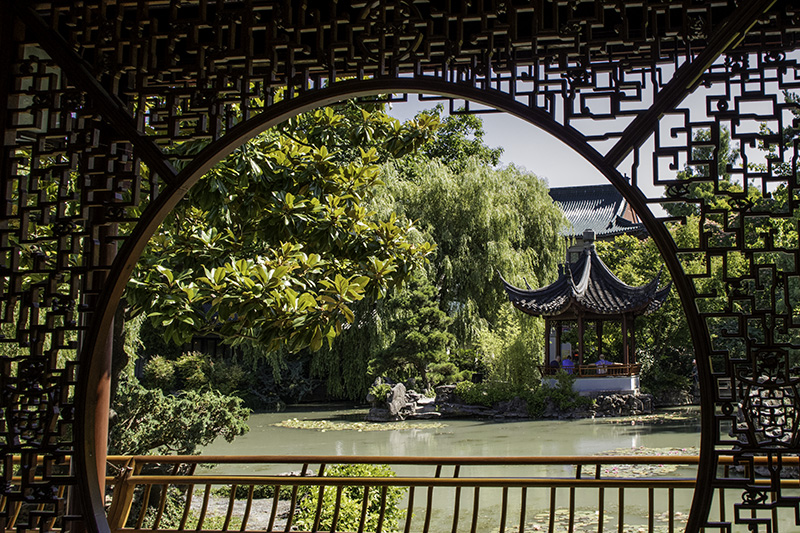 Yat-Sen Memorial Garden. The first traditional Chinese garden in North America. We learned about the jade pond and got to watch the feeding of the Koi which was interesting because the call them using a gong suspended just into the water. The fish apparently can feel the vibration and have come to associate it with being fed.
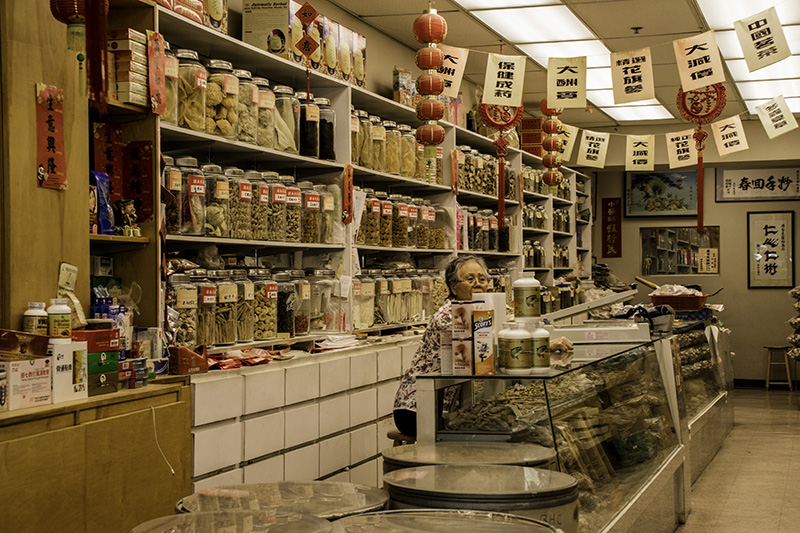 Then we had lunch at a Chinese restaurant which was a multi course meal served family style which featured eggrolls, pot stickers, fried rice, vegetables, shrimp with vegetables, sweet and sour pork (I think) and beef with broccoli. We then walked it off with a tour that took us to gas town. We had to circumvent some area in order to avoid the homeless and drug addicts. It seems that most of the younger generation Chinese have moved out to Richmond and the area is in decline.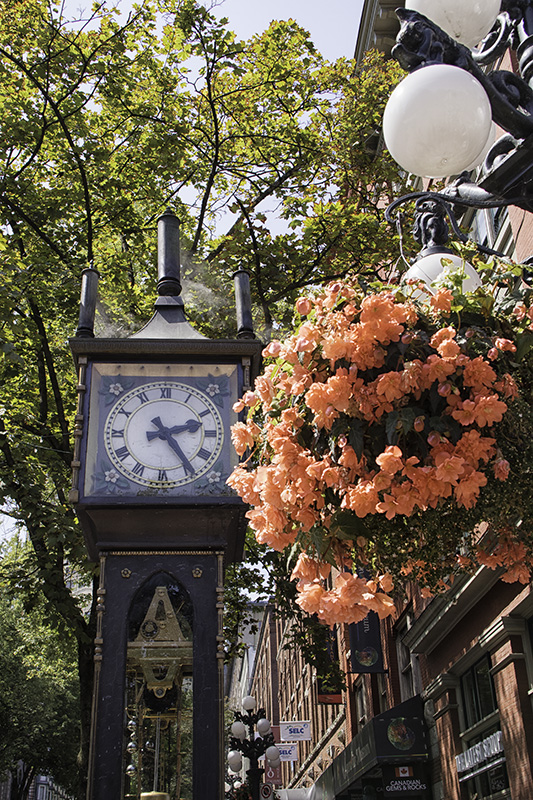
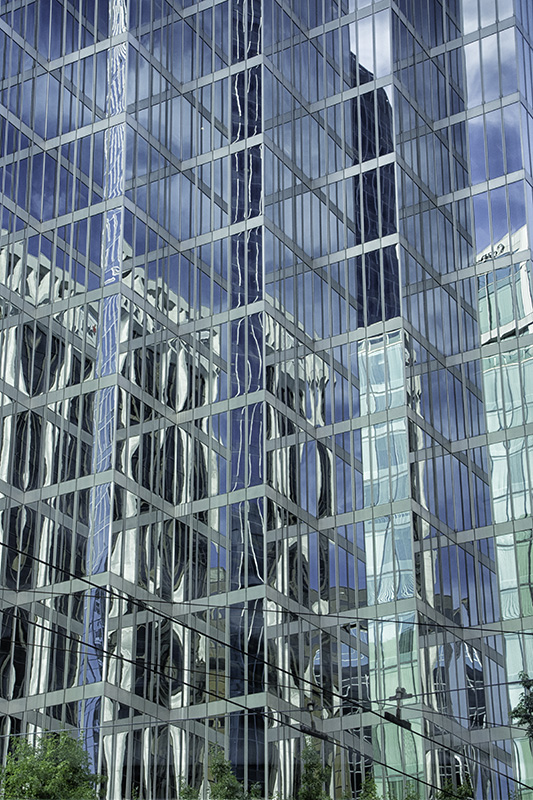 Our first full day of touring started with a bus ride around town with a guide to tell us all about the history and culture of the city. One thing we learned is that the reason they build so much with glass and steel is that it is more flexible during an earthquake than concrete or brick. We also learned that there is a serious housing crisis in the city as real estate prices keep spiraling upward. A tiny condominium in one of those high rises can go for upwards of a million dollars. People are being priced out of their own homes because the appraised value is so high they can’t afford the property taxes. Living in paradise has its price it seems.
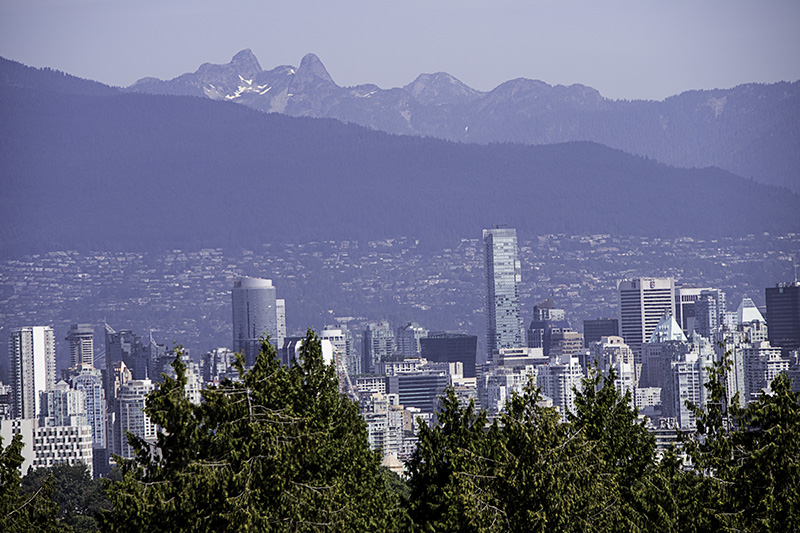 the city has the best views. It also features gardens planted in old quarry beds and a geodesic domed conservatory. There is also a plaza with a huge fountain surrounded by spaces for Tai Chi clubs to practice.
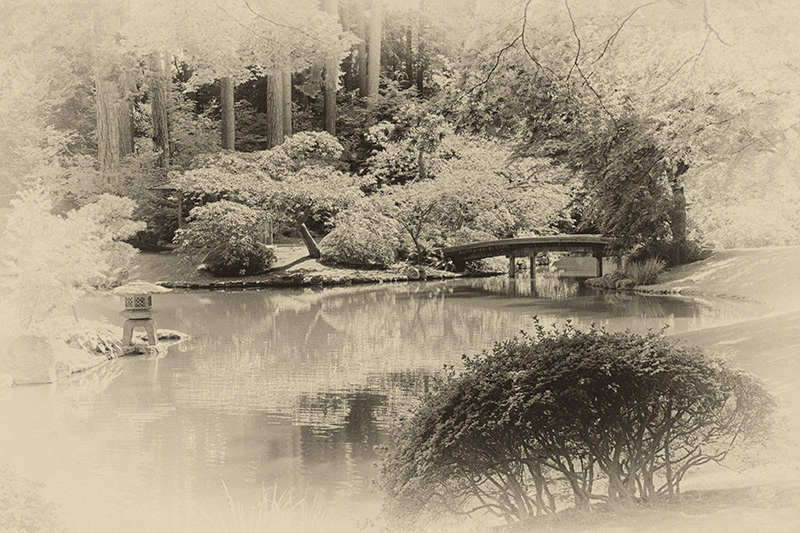 sounded like quite a guy, well ahead of his time in thinking globally and creating a culture of peace. Having just been to Japan I was a little underwhelmed with the garden, though I am sure it makes for a wonderful retreat from the hectic city. My photos all came out just looking green so I decided a black and white treatment was the way to go.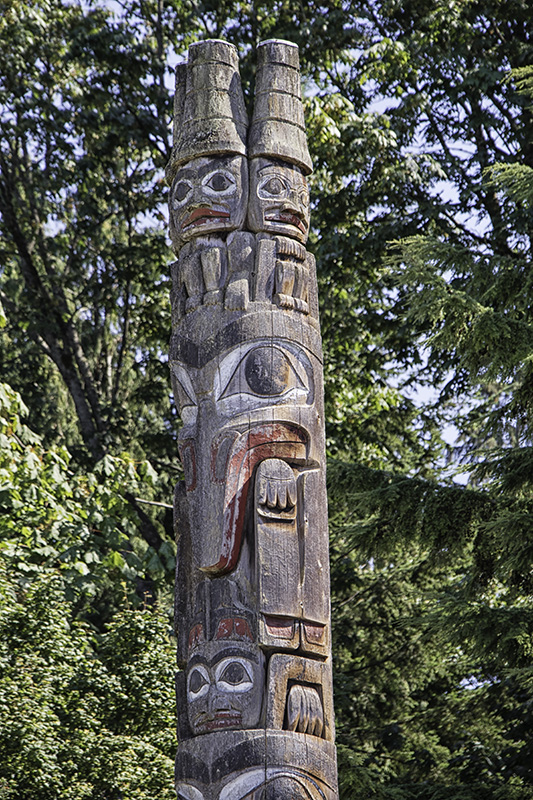
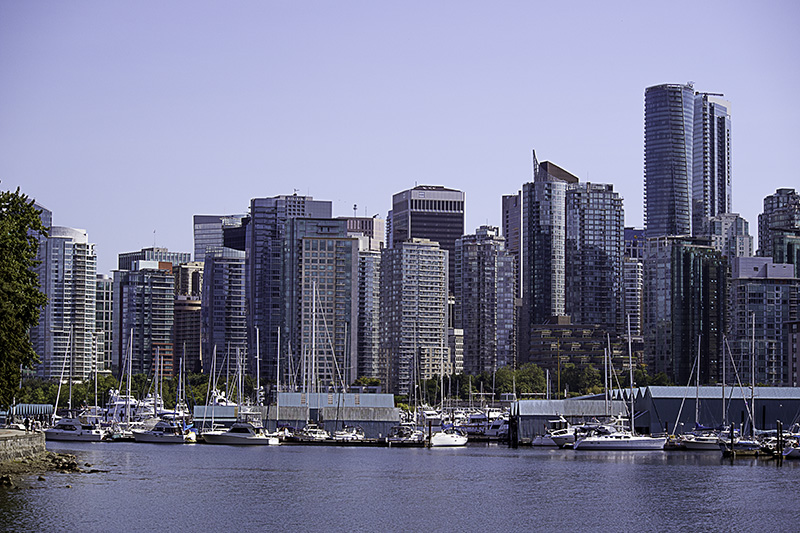 This is going to be short because it is late and I am tired. I spent my first half day in Vancouver, B.C. today and so far I am impressed. Everyone is talking about the heat wave. Gee, I think it might have gotten up to 80 today. But the natives were out enjoying it and the tourists are here in droves.
 water there are mountains in all directions. It is a city of vast open spaces and miles of bicycle and walking trails. It is a city of art and architecture. And it is a city that celebrates diversity and embraces its heritage. It is a city where food is celebrated from farm to table to around the world.
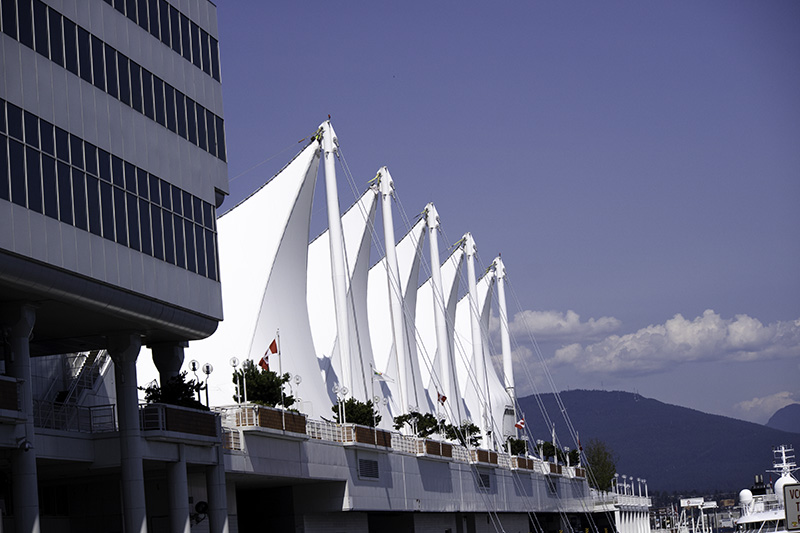 I took a Hop on, Hop off tour today but I only hopped off once for about an hour to explore Granville Island and eat lunch. It still took four hours just to ride around the city on the bus. To visit all the museums and explore all the neighborhoods would take, oh, I don’t know, maybe a year. I’m looking forward to learning more over the next few days.
 I set out today on my next adventure, a garden tour of Vancouver and Victoria. So far, I have only made it to Portland. I fly to Canada tomorrow to meet up with the Road Scholars. But in the meantime I wanted to kick things off right with a visit to the Oregon Garden. It has been on my radar for awhile but it is 12 miles off the interstate to the east of Salem, so this is the first time I took the time to make the trek.
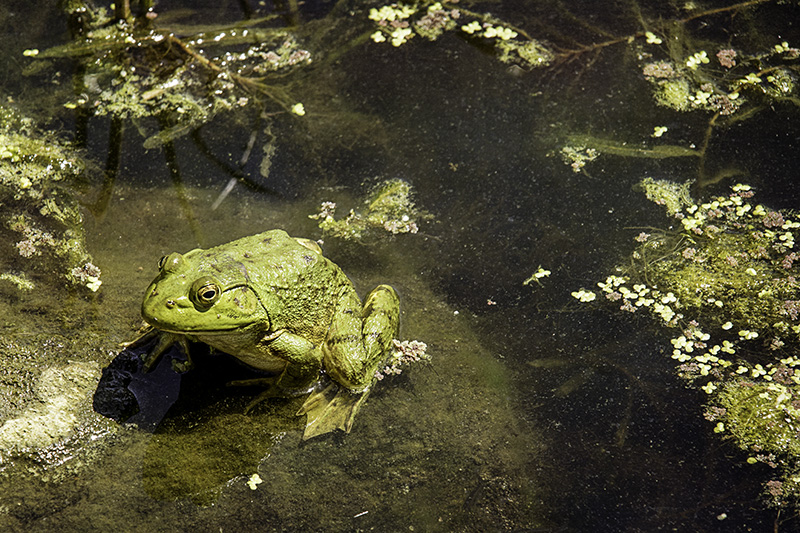 And it was well worth the time and effort. There are 20 specialty gardens packed into 80 acres on the outskirts of Silverton. I’m glad they have good signage to get you there or I would surely have gotten lost. I’m glad I have a good map or I would surely have never found my way back to the Interstate. My first stop was the water garden and one of the employees pointed out a frog pretending to be invisible. I’m always looking for frogs to photograph and rarely find them so this certainly got me off on the right foot.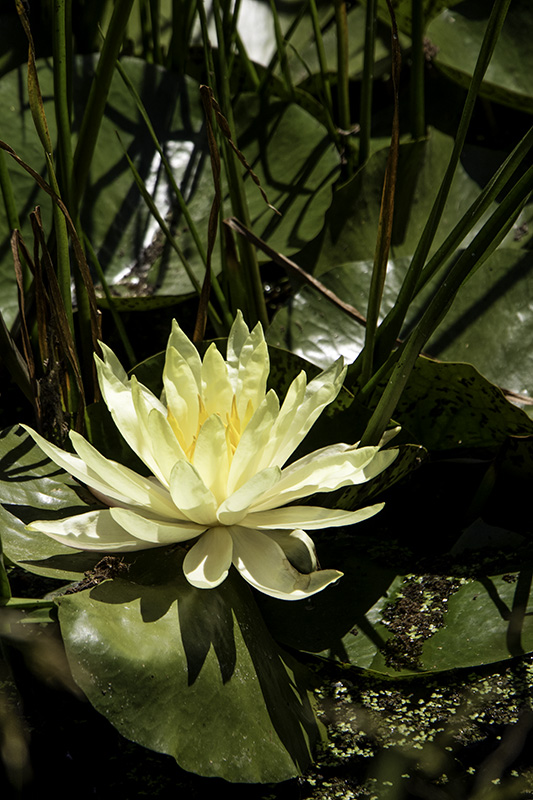
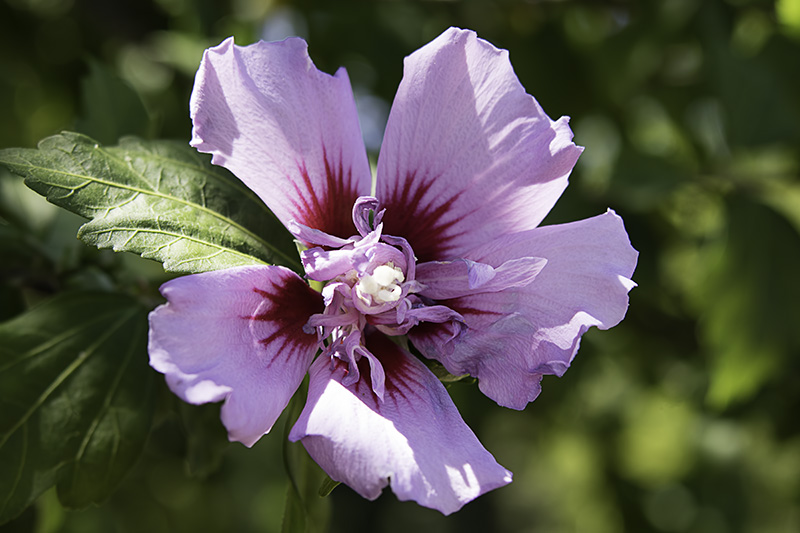
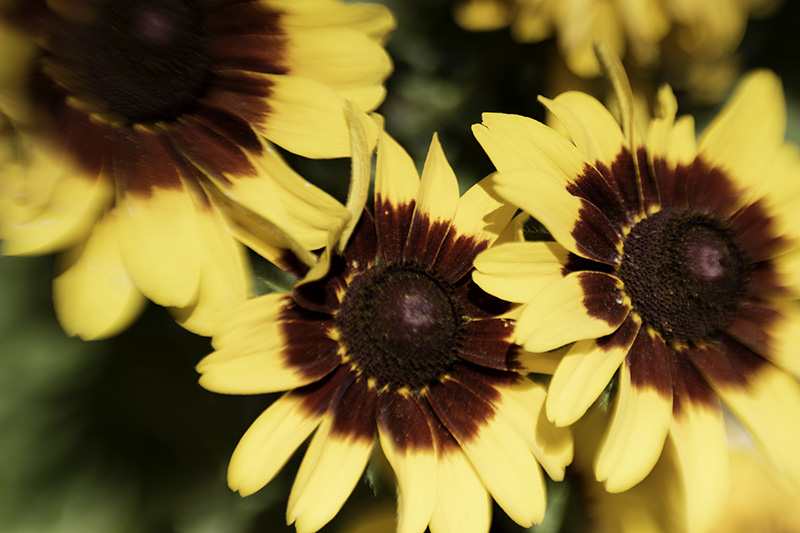 aw a bunch of flowers in bloom including these Black eyed Susan’s. It was only after I headed into the Home demonstration Gardens that I realized I had just been photographing in the Medicinal Garden.
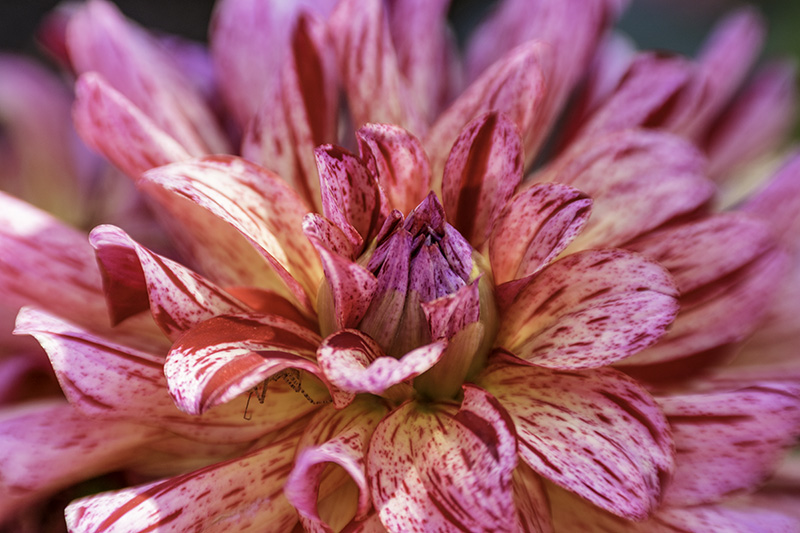 e Gordon House, which was moved to the Oregon Garden property in order to save it from destruction. When I come again though, it will be in the spring or fall. the Dahlias should be lovely in September. Though I did find a few blooming in July.
 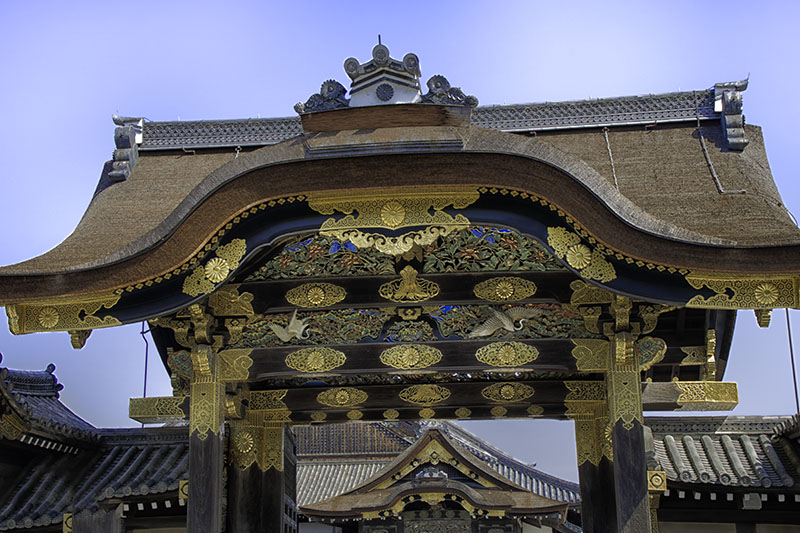 final day in Kyoto started with a visit to Nijo Castle, the last remaining home of a Shogun. It was a very impressive complex with gold leaf on the gates and three-dimensional wood carvings. There were paintings on gold leaf covered screens with tigers in rooms where power was to be commu
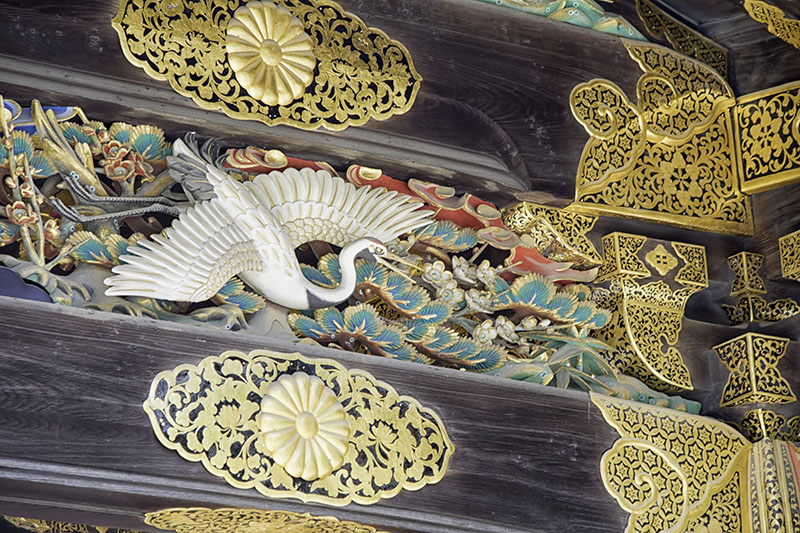 nicated and peonies in the more peaceful areas. The floors were intentionally designed to squeak when walked upon so no one could sneak up on the Shogun.
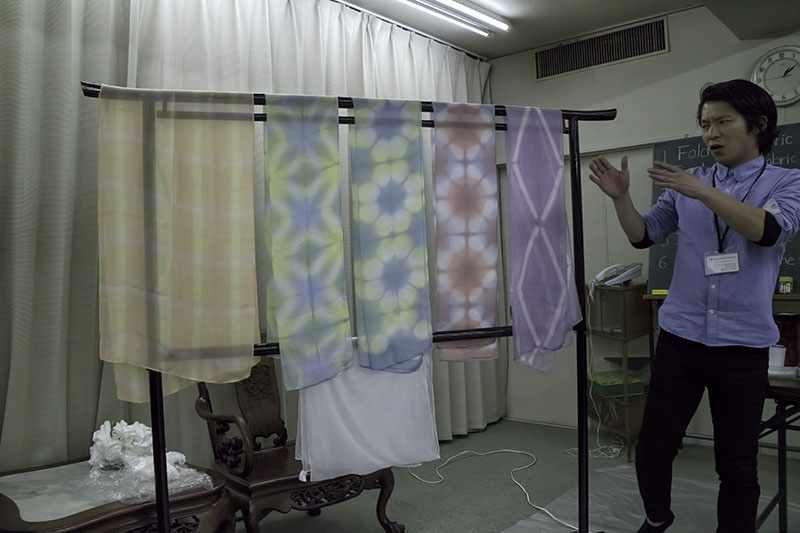 We then walked a few blocks to the Shibori museum where we had a lesson in making dyed silk scarves. We got to keep our creations to take home and most everyone wore them to dinner. We also saw a video on the shibori technique which consists of tying off hundreds of little bits of fabric and then dying it to create beautiful patterns. It is painstaking work
 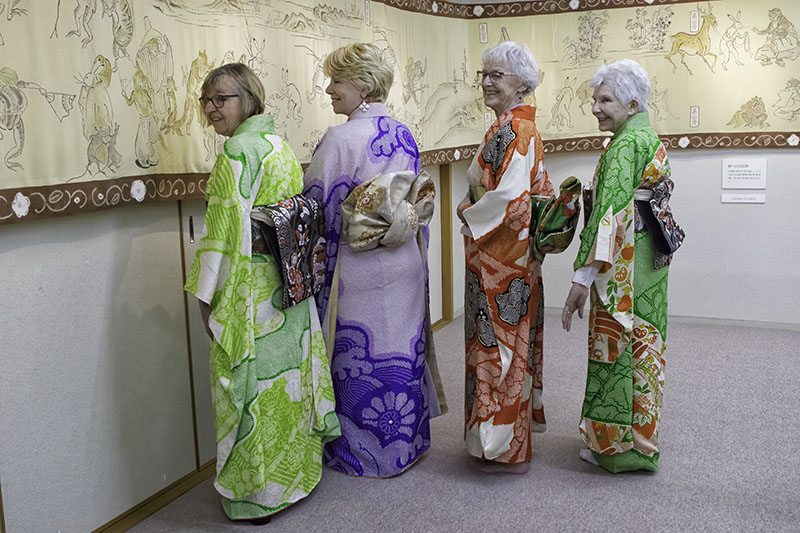 and can take up to two years to make a kimono which might then sell for $15,000. Some of our ladies had an opportunity to try on the kimonos.