My Great Smokey Mountain Intensive started out well with arriving in Greenville, South Carolina only a half hour late and with all luggage at hand, in spite of travelling on three airplanes over a 12-hour time span. Tight connections all around and a three hour time change meant I had to dip into my emergency food supply for dinner, supplemented by some high carb snack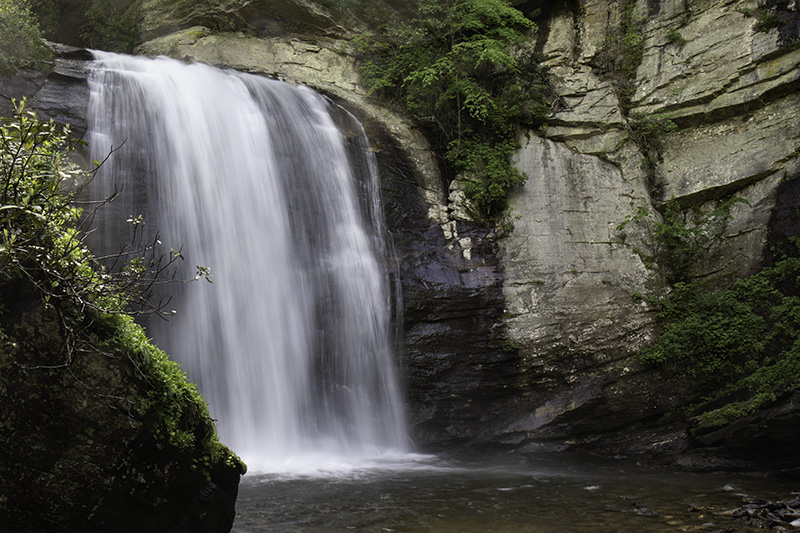 s which were the only thing available at the hotel.
Looking at the map to plan my route to Gatlinburg this morning revealed that the terminus of the Blue Ridge Parkway occurs at the boundary of the Great Smokey Mountains National Park. The Blue Ridge and the Great Smokies it turns out are parallel ranges within the Appalachian Mountains. Anyway, I headed north into the mountains with the in intention of sailing into the Park via the l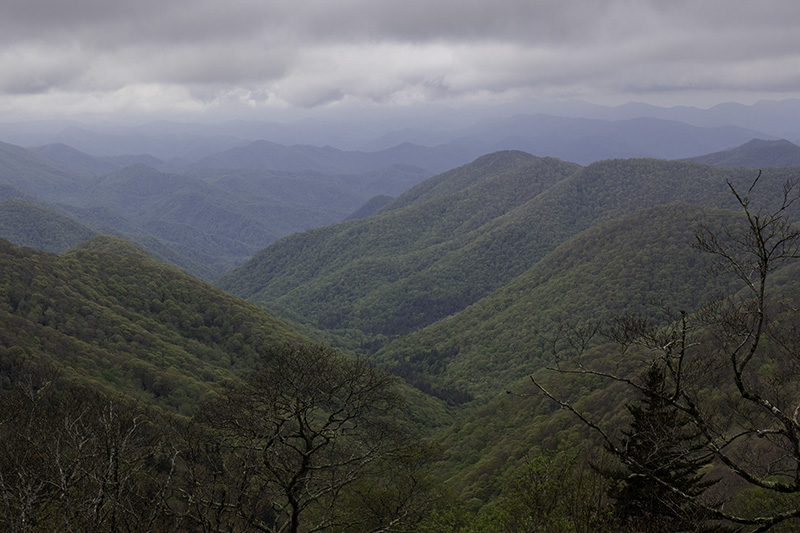 ast 50 miles of the Parkway. Even before reaching the Parkway the scenery became amazing and I encountered my first waterfall in the Pisgah National Forest. Looking Glass Falls can be accessed from a stairway by the side of the road. I made the mistake of not taking my super wide-angle lens down to the base of the falls. So, while I got the shot, I would have liked a little more of the surrounding rocks and forests. I would have gone back but there were a LOT of stairs and my heart was already thanking me for the workout.
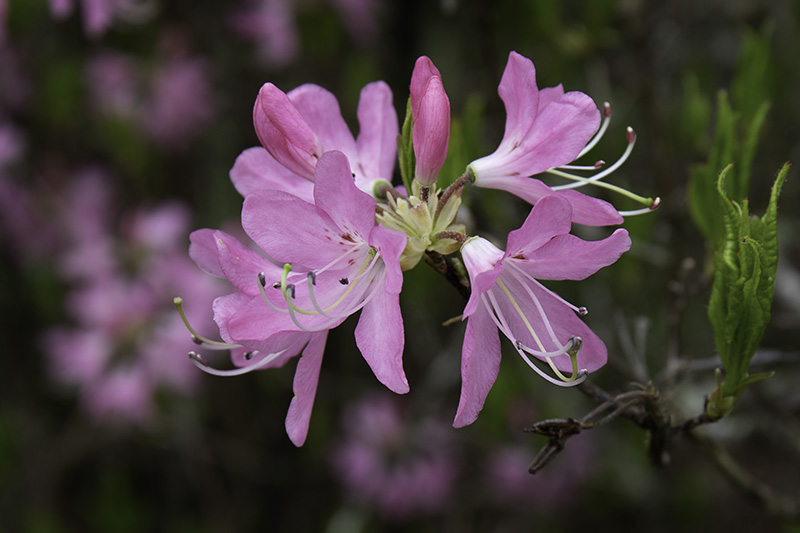
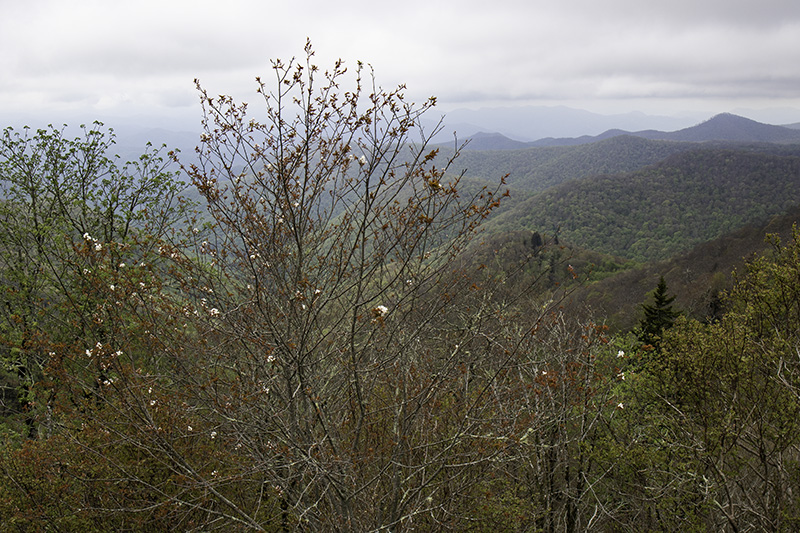 The views along the Parkway were nothing short of breathtaking. Even on a cloudy day. Some azaleas and rhododendrons were in bloom along with numerous other wild flowers. Toward the higher elevations I encountered some fog which was enchanting until it turned to pea soup. But it didn’t last too long. There were plenty of long vistas to be had.
 I had been worried that the 120 or so mile drive would get me into Gatlinburg before I could check in to my condo for the next three nights but there was nothing to worry about as there were plenty of things to stop and photograph and I didn’t even make it to my planned lunch stop before my stomach insisted on a detour. I found a little place called Country Vittles in Maggie Valley. A real family run business, Grandma showed me to my table, Mom brought out my food and took my money and granddaughter Pearl was the waitress and bus girl. The daily special was Chicken and dumplings and the vegetable of the day was pickled beets. To which I added fried okra for my second side, a delicacy I have not tasted since my last visit to North Carolina. Of course, a biscuit and cornbread were served with the meal though I had to shy away from a commodity labeled “whipped spread” which purported to be 48% vegetable oil but was vague on the other 52%.
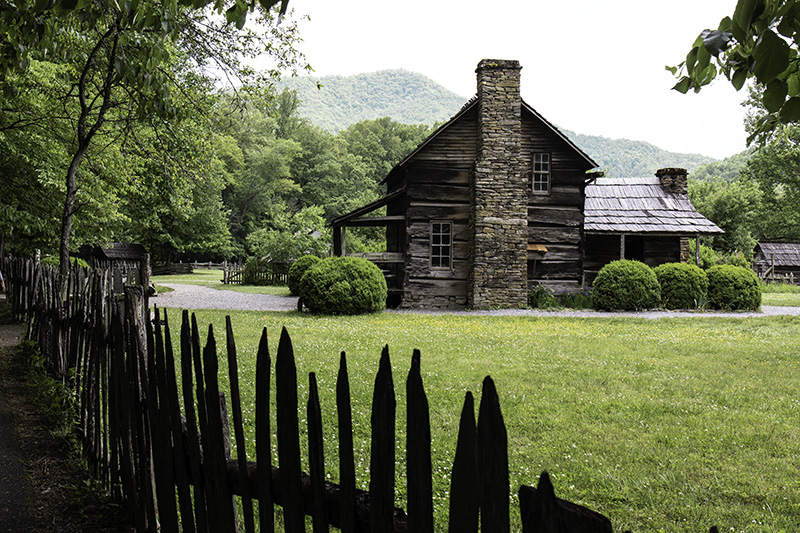 Arriving at the Park after another half hour’s drive I stopped off at the Oconaluftee Visitor center and toured the life-sized farm museum on the grounds. I especially liked the Irises planted next to the log cabin. By this time, I was beginning to zone out and even had to take a short nap in a roadside pull off. Then I proceeded to Gatlinburg (can you say tourist trap extraordinaire?). The condo took some finding and the time share people had to give me a sales pitch before letting me go to my room. Next time Holiday Inn Express, I think.
After perusing the billion or so brochures I have picked up today I set out to find dinner. I was excited to hear about a BBQ joint just a couple of blocks from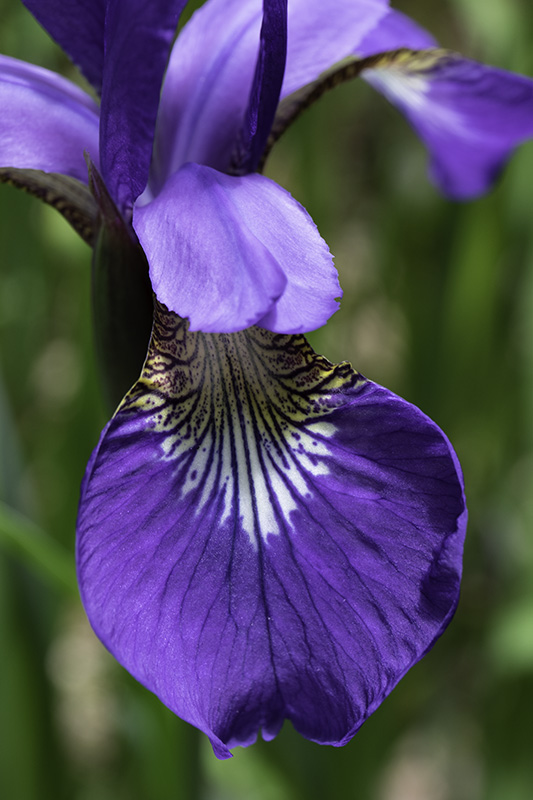 my digs (no more driving today, yay). I should have known when I walked in and saw no other diners that it was not going to go well. I almost walked out when the guy handed me a styrofoam cup for my iced tea (No, Jeanne, we are not in Oregon anymore). But I was tired and hungry so I went ahead with the most mediocre BBQ I’ve ever eaten (How do you ruin barbeque?). Oh, well, I still have that coupon for Bubba Gump Shrimp that the time share sales lady gave me for tomorrow night. I still haven’t figured out where it is though I should have walked right by it on the way to Bones BBQ. My recollection of my one and only previous Bubba Gump Shrimp experience was underwhelmed and overpriced. But hey, I’m here for the scenery.
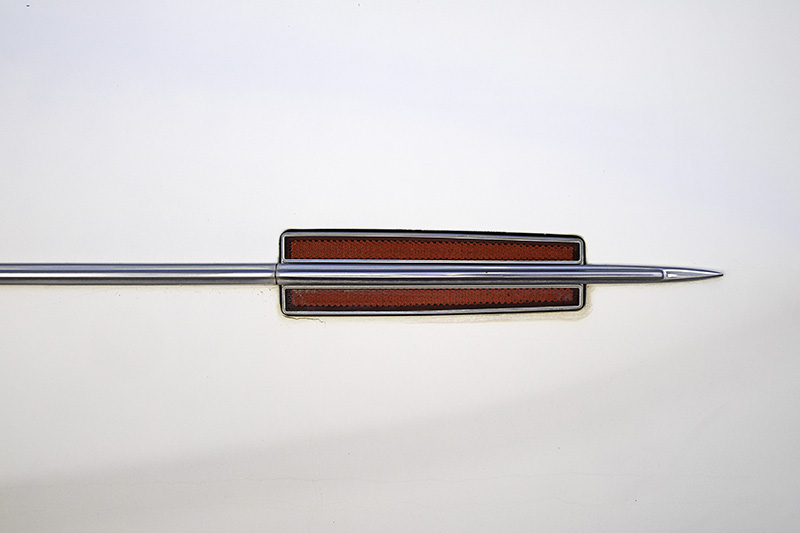 ay was all about Route 66! There is a stretch of the old highway now maintained by the State of Arizona as AZ66 which veers far away from the interstate and passes through some towns which have dedicated themselves to preserving the history of the iconic route. I had the most fun just looking for abstracts of parts of old cars and trucks.
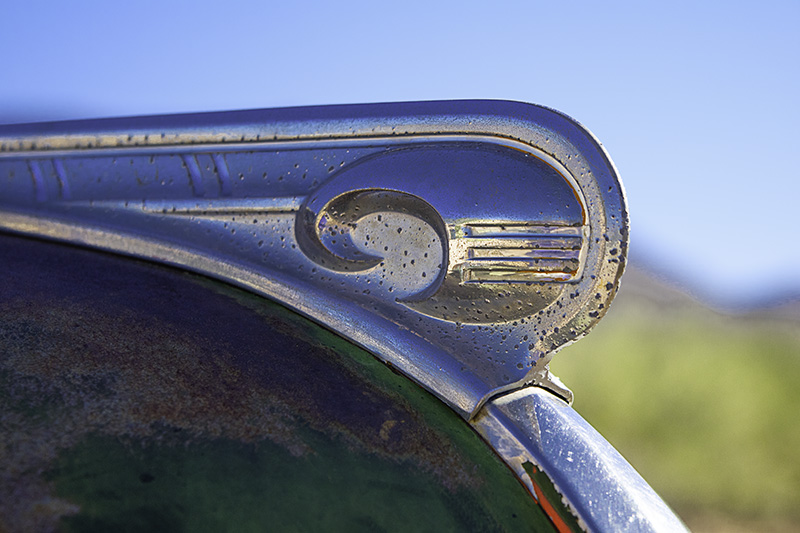
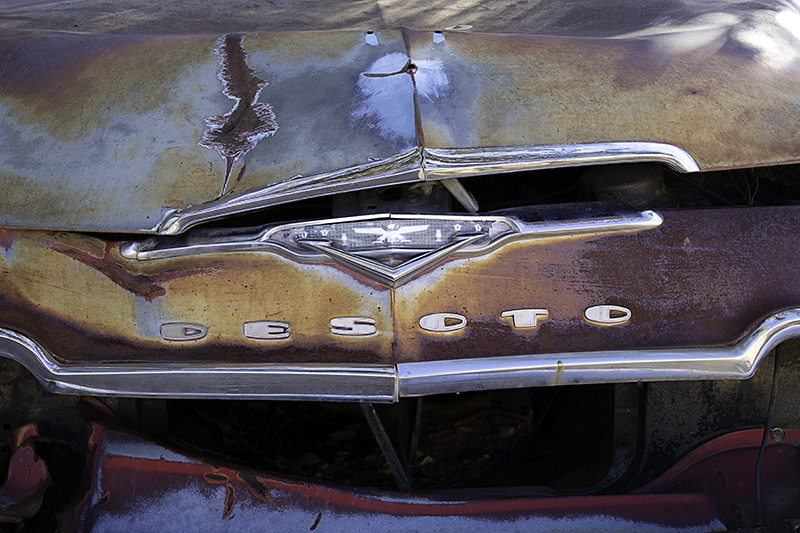 The next two, a wrecked DeSoto and the hood ornament of a dodge ram truck from the 1930s were found at the Hackberry General store which is a treasure trove of old cars, coca cola signs, gasoline signs and even an old tractor or two.
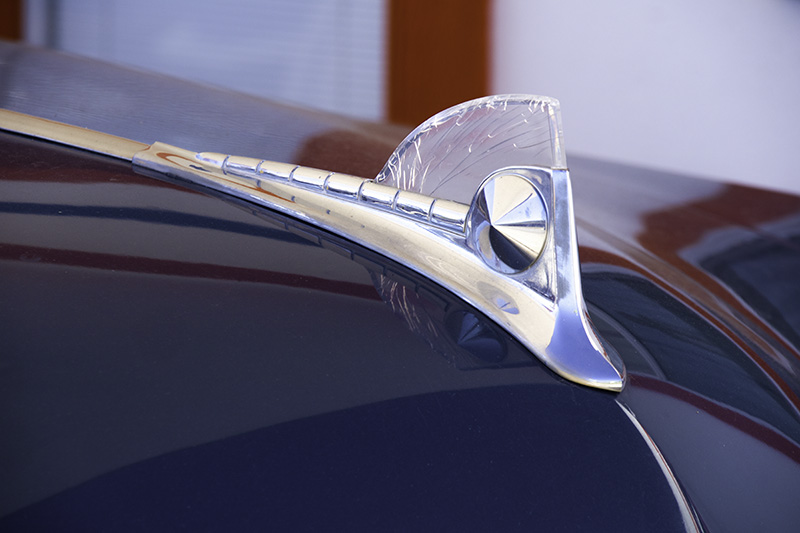
 a sneak peak at Williams where I will be staying on the first night headed back. Williams is a city that has built its economy on its erstwhile position on Route 66 and its proximity to the Grand Canyon. If you are looking for Route 66 kitsch, you will find it in Williams. I found this 1950s ford reflecting its red and white restored gas station for a great hood ornament abstract.
 group this evening. I’m looking forward to letting someone else do the driving for a week. I was disappointed to learn that absolutely no photographs are allowed on the Hopi Reservation where we will be going tomorrow but at least I will be able to get some shots at the Heard museum before we head back north. Assuming, of course, we will be able to head back north given the forecast of snow in Flagstaff.
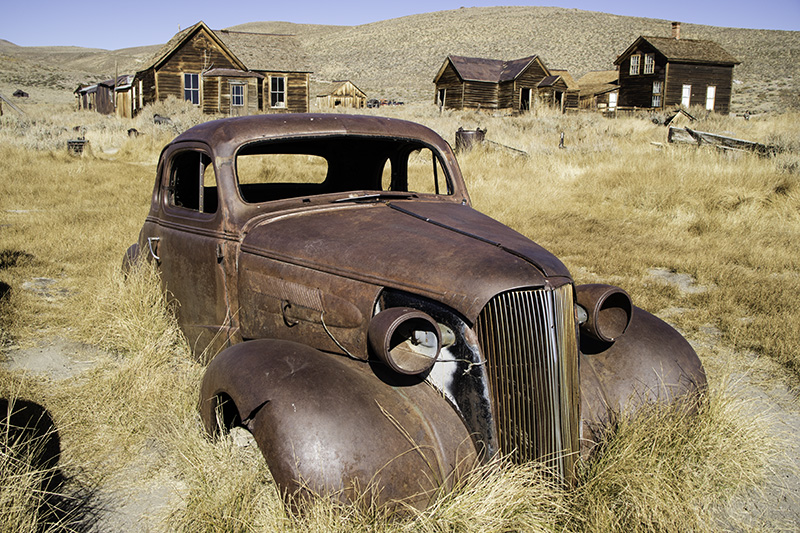 Bodie, California, one of the best ghost towns ever, has been on my photographic bucket list for at least 25 years. Today I finally got there and it didn’t disappoint. Well, not too much. Unfortunately, it has gotten very popular and unfortunately the timing of my trip put me there on a Saturday so I didn’t exactly have the place to myself.
 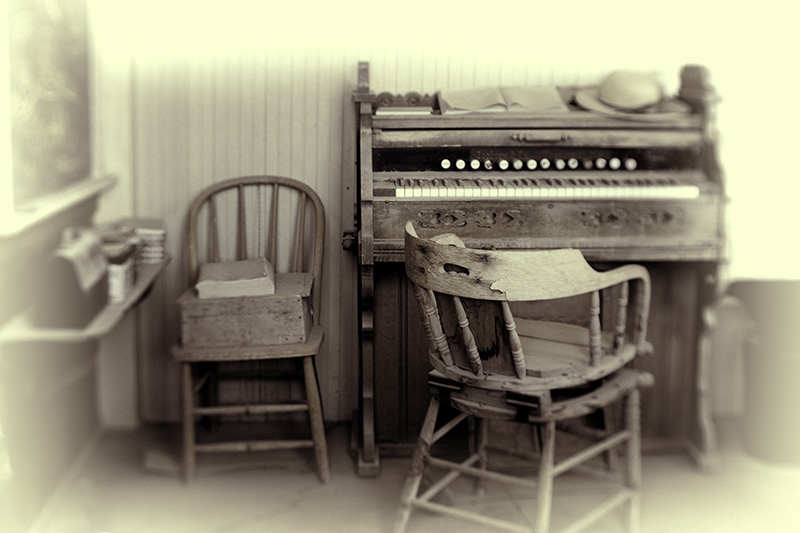 car in line at 8:45. By the time I left around 11:30 the parking lot was full, there were about 10 cars lined up to pay the entrance fee and I must have passed at least 20 more coming up on my way down. There was a photography workshop there getting in the way of many of my pictures but still I persevered and got some good shots in spite of it all. I am thinking of giving it another go on the way back to catch the afternoon light and see if it is a little less crowded on a weekday.
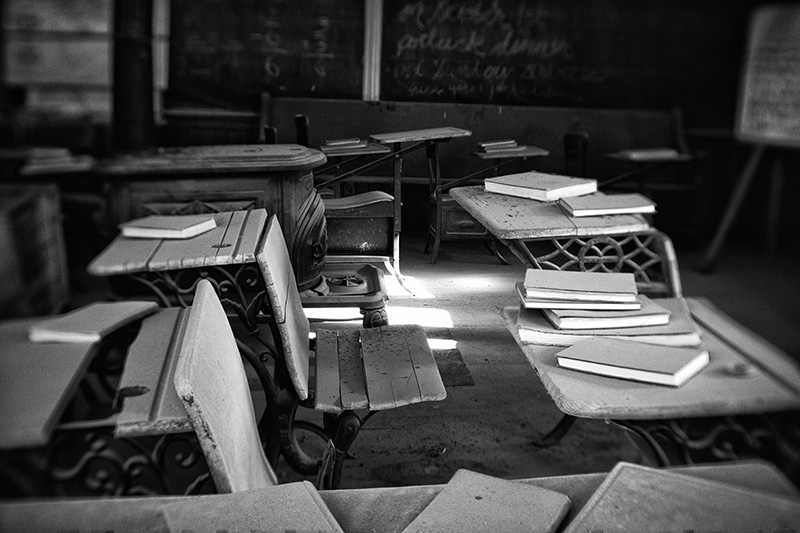 I haven’t yet finished processing my pictures but I have enough to give you a taste of Bodie. Gold was first discovered here in 1859 but it wasn’t until the 1870s that a vein was found that made large scale mining profitable. Bodie boomed for about 10 to 15 years but by the 1890s the mines began to play out. A couple of fires put a few more nails in it’s coffin and by the 1940s the town was deserted and most of the land fell into the hands of the family that owned the bank.
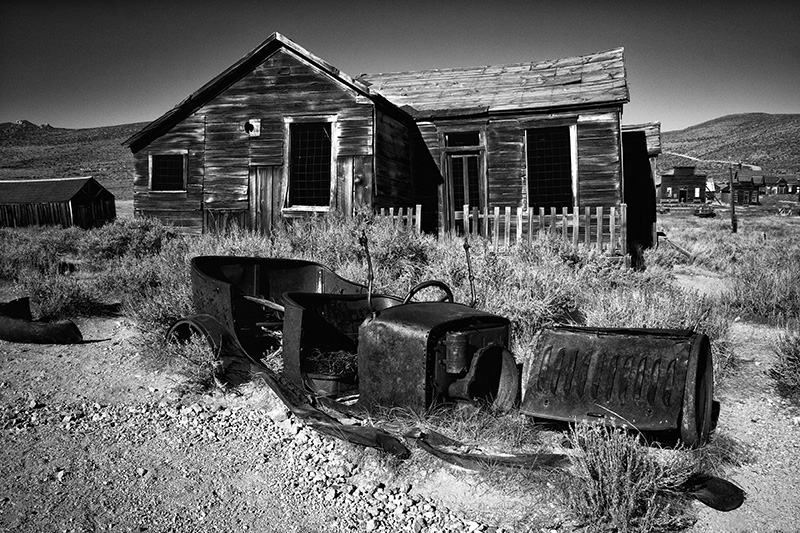 assumed an attitude of what they call arrested decay. Things have been left as they were when the residents left town and the rangers repair but do not restore the buildings. The cold dry climate at over 8000 feet elevation helps to keep Bodie somewhat intact.
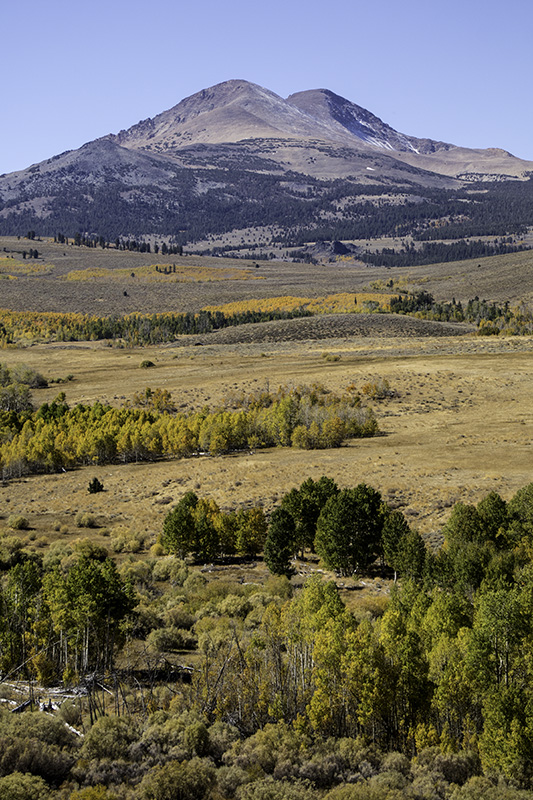 Leaving Bodie to make my way to my next stop in Bishop I saw a lot of aspen, some past peak, some beautiful but surrounded by sagebrush so not very photogenic. I only found one patch worth stopping for and somehow the picture just doesn’t capture what I was seeing. I also tried to stop at Mono lake put I didn’t have the right parking permit and I couldn’t find where to get one and since it was mid day I didn’t expect the photos would have been that great anyway.
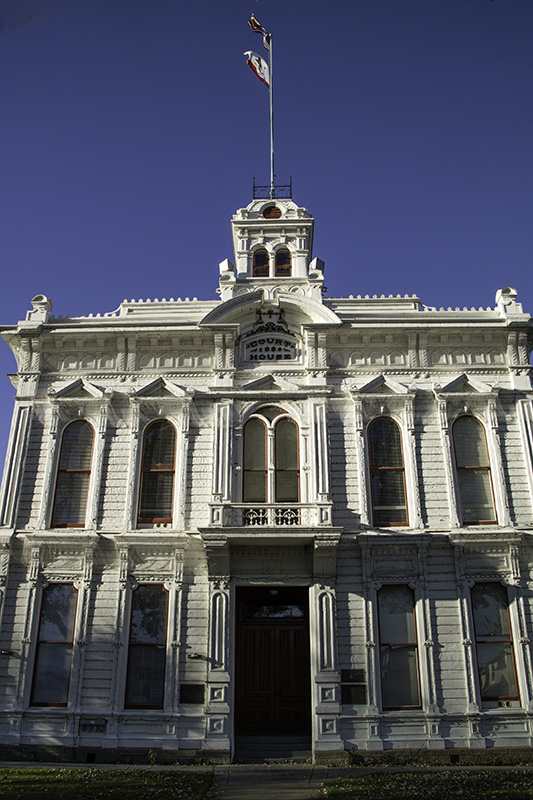 After a long hard day of driving I ended up in Bridgeport, California without significant incident. Fortunately, I think this will be my longest day of driving the whole trip. After a short rest I took the M3 out for a walk to see what I could find. It turns out my motel is right next door to the Mono County courthouse whose architecture I would have to describe as Italianate meets Greek revival. It is a pretty building, in spite of its schizophrenic design. Aside from being the county seat Bridgeport’s main claim to fame is being the gateway to Bodie, California’s most famous ghost town. That is, after all, why I am here.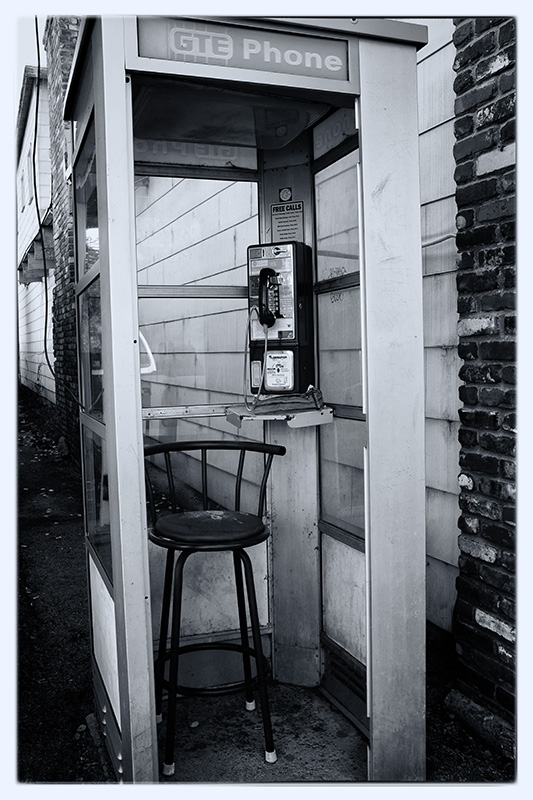
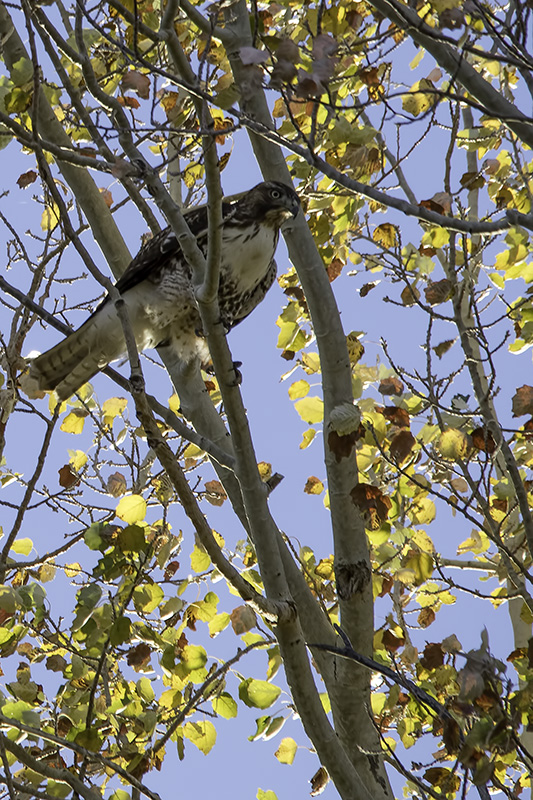 historic buildings, neon signs, and old mining equipment I headed down a side street where this hawk cruised into a tree right beside me. Yes, I did have to do some serious cropping as I only had a 18-150 zoom lens with me but I think he came out pretty well, all things considered.
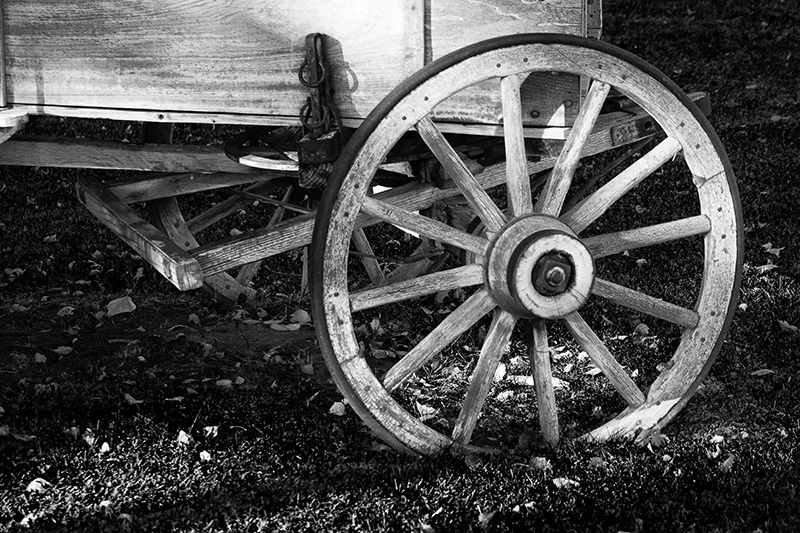 useum which, sadly was closed. But there was an assortment of mining and agricultural equipment from days gone by outside. None of the photos made the final cut for tonight though. I preferred this wagon wheel I found back at the motel.
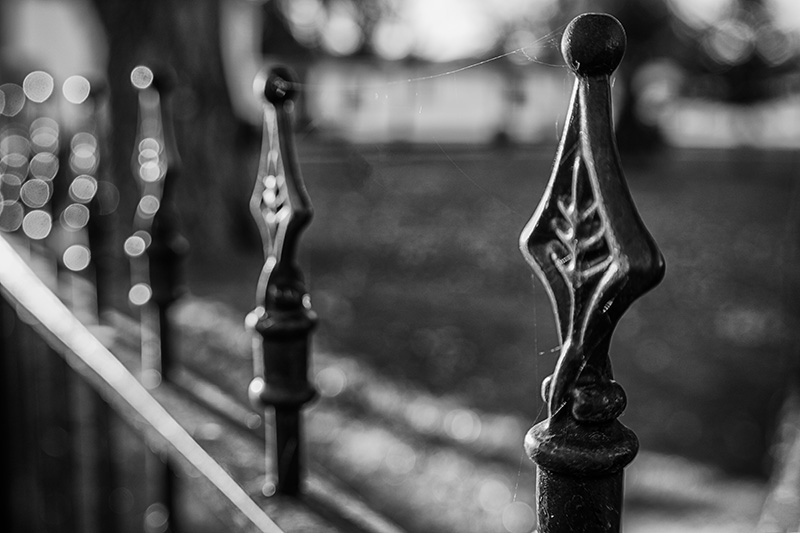 e mood tonight. Maybe it is just the subject matter. It turns out the courthouse plays bells every half hour. I hope this doesn’t go on all night as I need to get my beauty sleep before heading up to Bodie tomorrow.
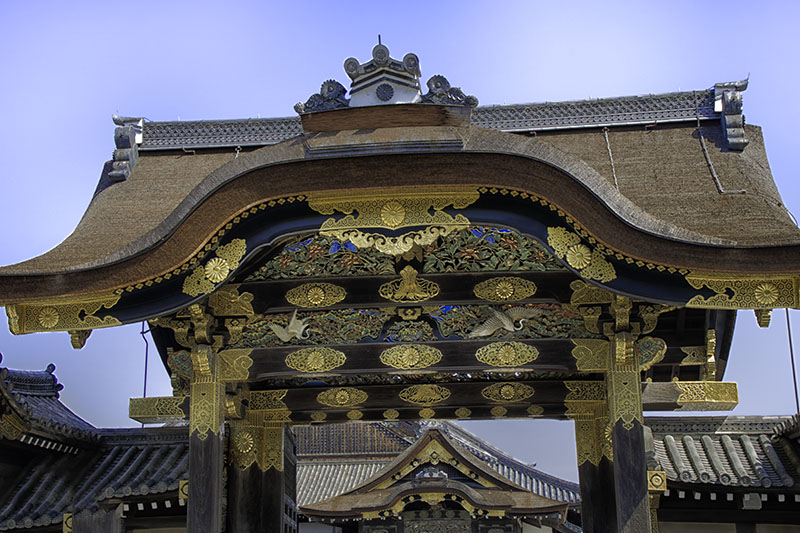 final day in Kyoto started with a visit to Nijo Castle, the last remaining home of a Shogun. It was a very impressive complex with gold leaf on the gates and three-dimensional wood carvings. There were paintings on gold leaf covered screens with tigers in rooms where power was to be commu
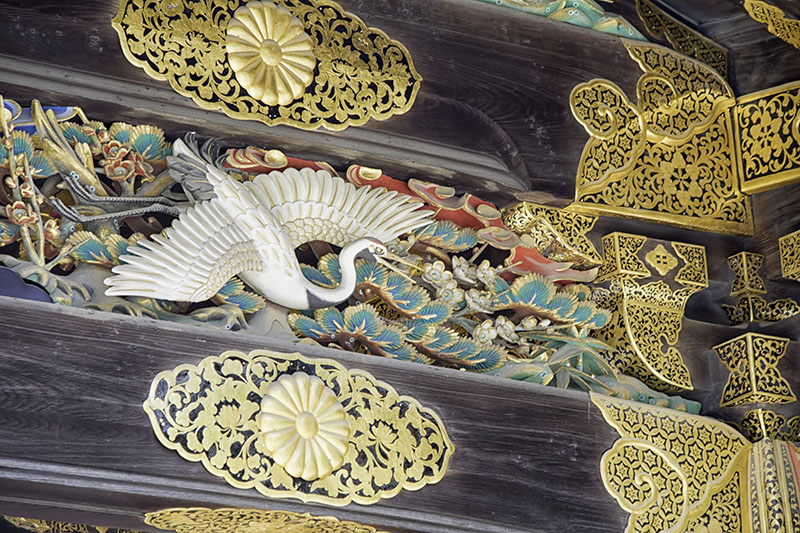 nicated and peonies in the more peaceful areas. The floors were intentionally designed to squeak when walked upon so no one could sneak up on the Shogun.
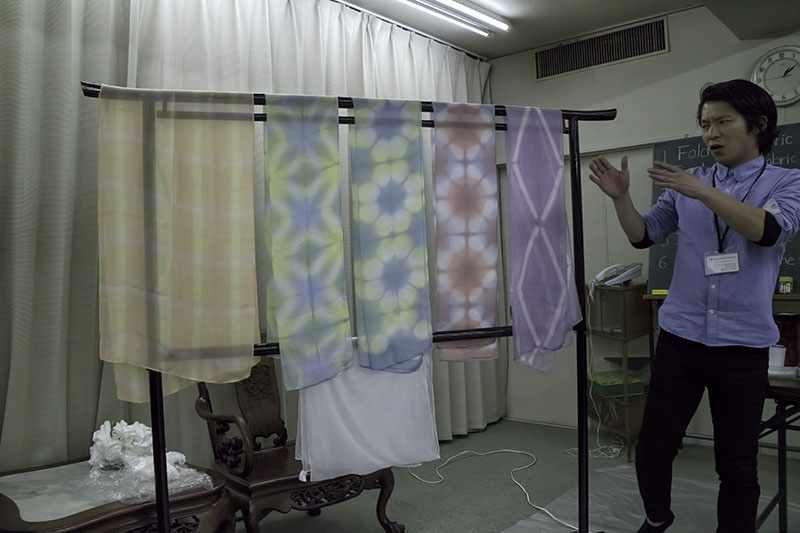 We then walked a few blocks to the Shibori museum where we had a lesson in making dyed silk scarves. We got to keep our creations to take home and most everyone wore them to dinner. We also saw a video on the shibori technique which consists of tying off hundreds of little bits of fabric and then dying it to create beautiful patterns. It is painstaking work
 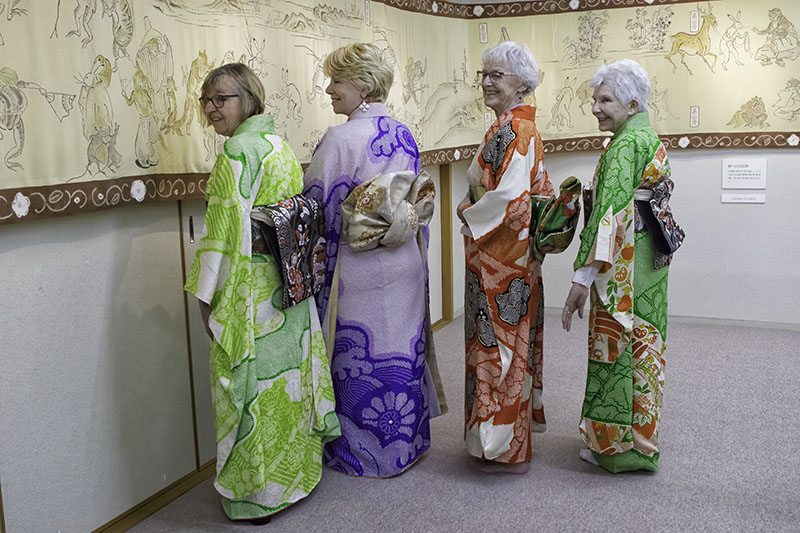 and can take up to two years to make a kimono which might then sell for $15,000. Some of our ladies had an opportunity to try on the kimonos.
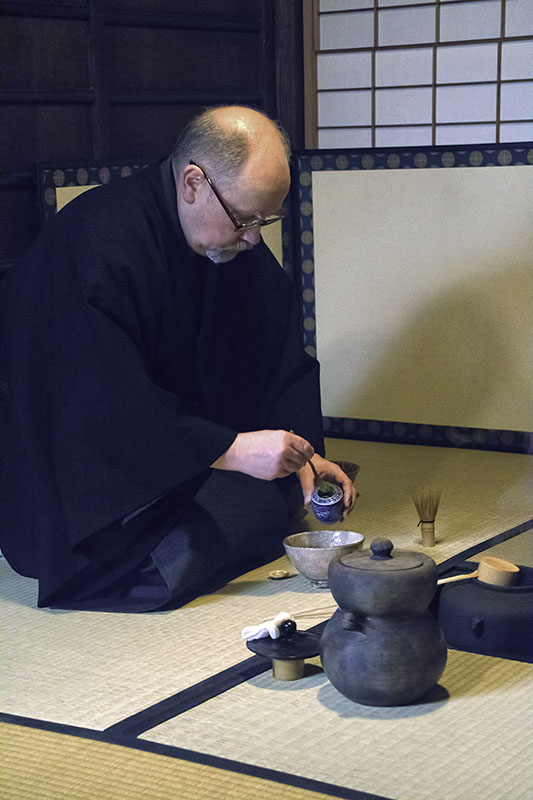 Our first stop today was at the home of a tea master who demonstrated the preparation of tea and explained the tea ceremony which would normally take four hours. Ironically, Michael is not Japanese but Swiss. He became interested in the tea ceremony through martial arts and now lives in Japan and provides lessons in both.
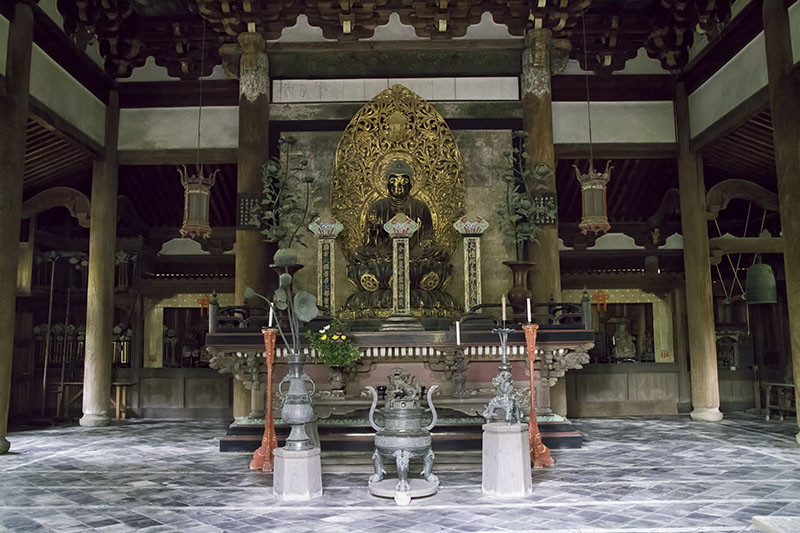 where we learned something about the man who invented the tea ceremony, or at least formalized the ritual, Sen No Rikyu. He is also credited with developing the concept of wabi-sabi, beauty through simplicity, a concept I can definitely get behind. We had an opportunity to view some gardens that Sen had designed. Unfortunately, we were not allowed to take pictures and the post cards they had available did not capture what I would like to have taken pictures of. One interesting thing we were told is that the white rock gardens associated with Zen Buddism came
 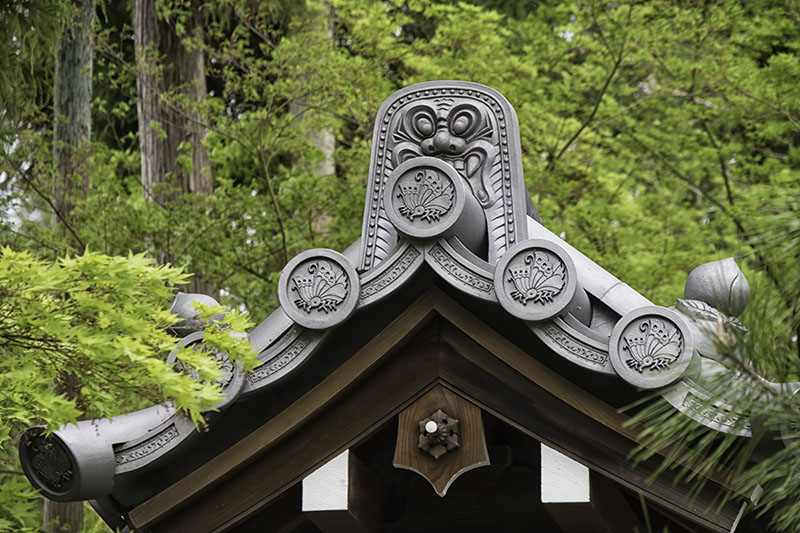 about because there was a big fire in Kyoto back in the 15th century and after all the temples had been rebuilt there was no money left to replace the classic gardens so groomed white rocks were substituted for water.
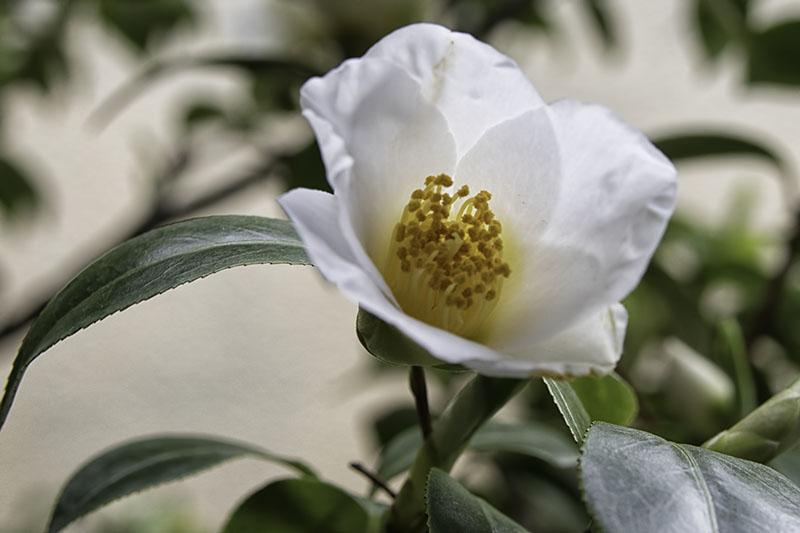 c sort of pottery used for tea bowls which has been produced by the same family for 15 generations. Personally, I could not see what all the fuss was about. But they also had a display of Noh masks which was of more interest to me. But once again, no photographs. I’m beginning to understand that the advantage of cell phones over real cameras is it is easier to cheat in a situation like this. They did, at least, have some nice flowers in their front garden. From there, we caught a cab back to the hotel and are once again on our own for dinner. I am thinking of returning to the Nishiki market to taste some street food and look for souvenirs.
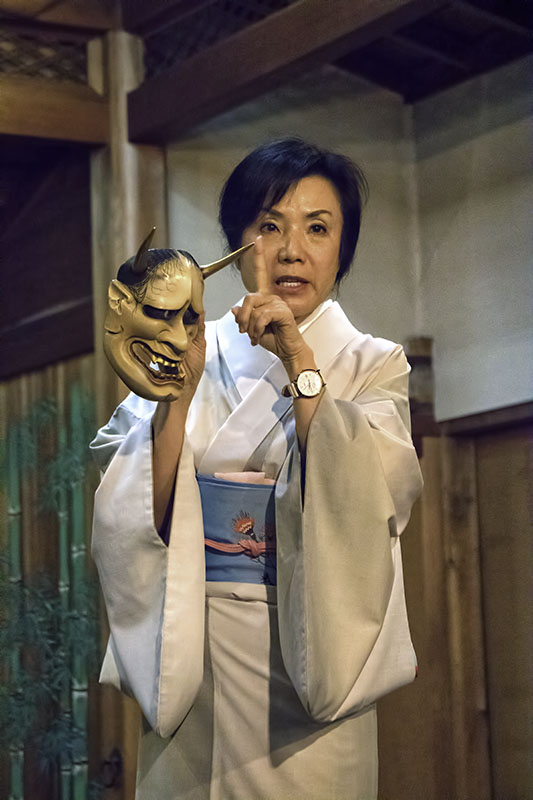 alad and seaweed side. I look forward to my way of cooking scrambled eggs. Anyway, we piled into taxis again for a ride up the street to a Noh theater which is one of the longest operating in Japan. The woman who owns the place gave a talk on Noh, showed us some masks and robes, and trained part of the group in how to do Noh movements. Her son, who is a Noh actor demonstrated the drum they use to express emotions and he gave a short demonstration play. I’m still not sure I would want to sit through two hours of it but at least I would have a better understanding of what was going on.
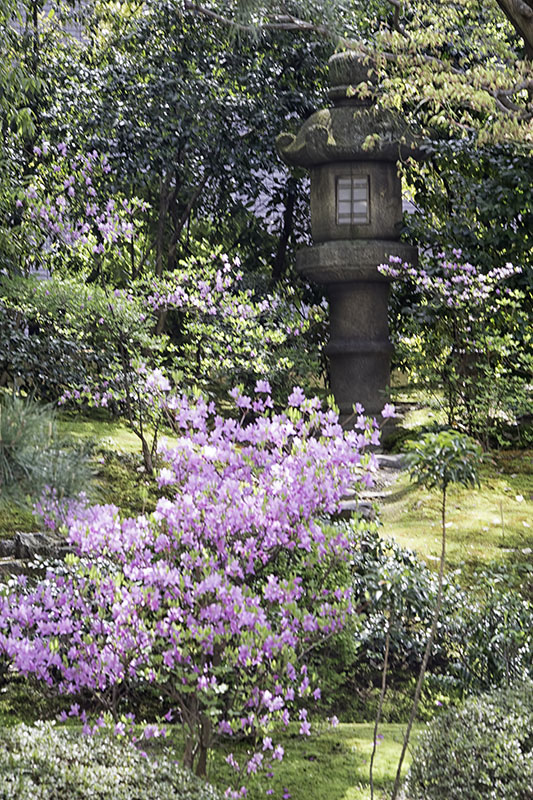 In order to use the restroom, we then went to the sweets museum next door. They had whole flower arrangements made of sugar. Very interesting but there were no English translations on the exhibits. We then walked a few blocks to the Kyoto Heian Hotel for lunch. The hotel has a beautiful Japanese garden which we had time to explore. Lunch consisted of a salad, pork chop with noodles, and bread.
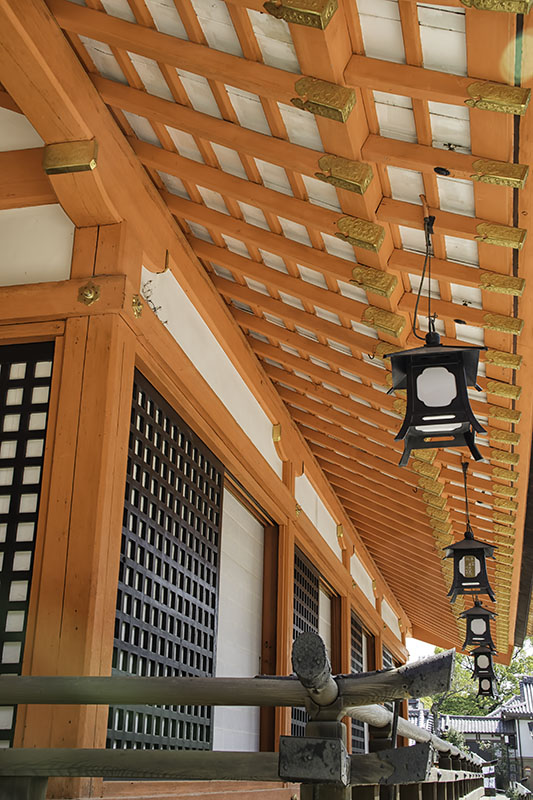 otel we boarded taxis once more (did I explain that the streets of Kyoto are to0 narrow and crowded for buses to be useful?) and headed to the Yasaka Shrine, a rather large and well visited Shinto site whose deities specialize in curing illness. We then had a short walk through the Gion district made famous by Memoirs of a Geisha. It was less
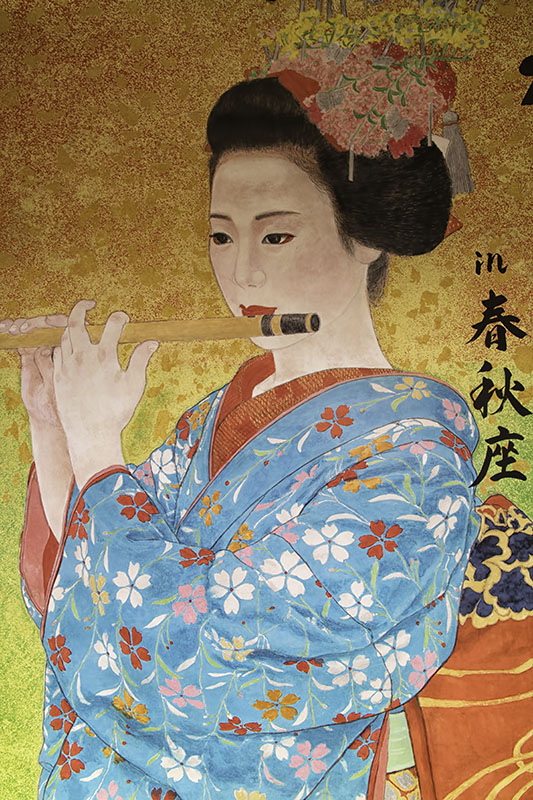 scenic than I had hoped but there were a lot of these posters that I found enchanting.
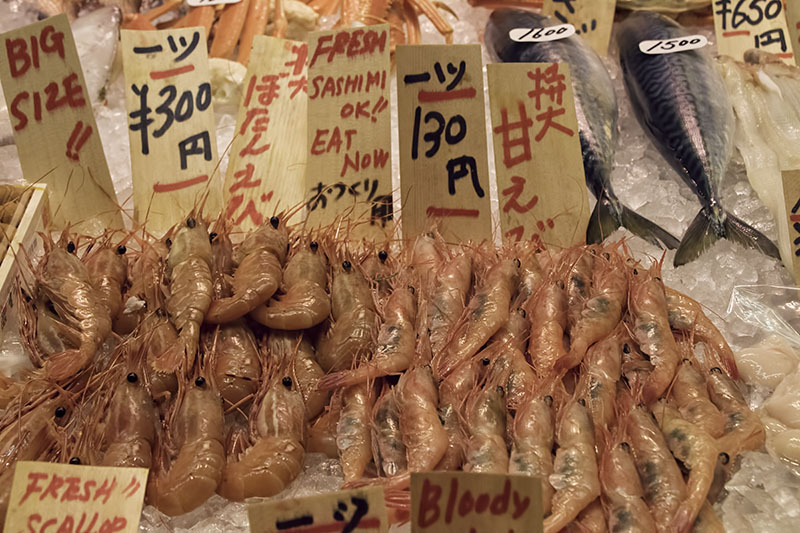 han locals.
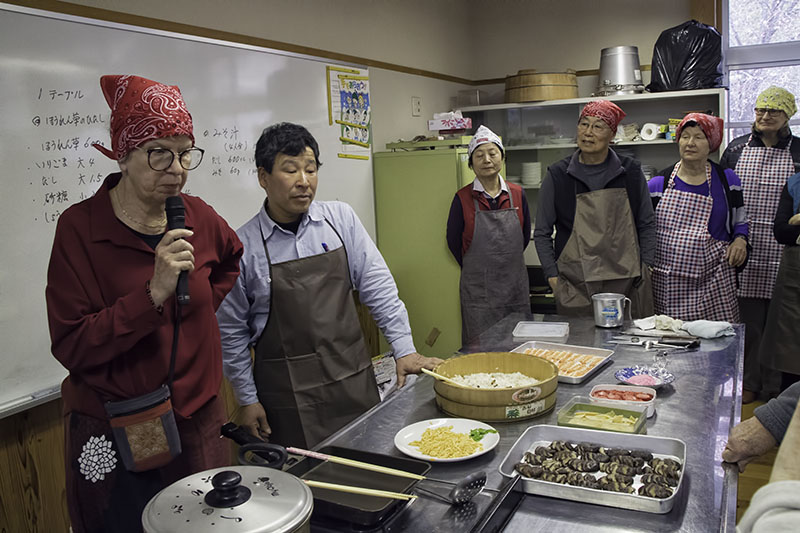 We boarded the bus for the last time this morning and headed into the mountains to a small village called Miyama. Here we were taken to an elementary school which had been closed and was being repurposed as a sort of community center. After seeing some of the classrooms we were taken to the cafeteria where we were handed aprons and bandanas in preparation for a cooking lesson in which we would make our own lunch. The first course was fairly simple, parboiled spinach mixed with ground sesame seeds. Next we did a stir-fry composed of julienned carrots and green peppers and shaved burdock root (don’t ask, it’s supposed to be really good for you and didn’t taste bad). Then we prepared something called Chirashi or
 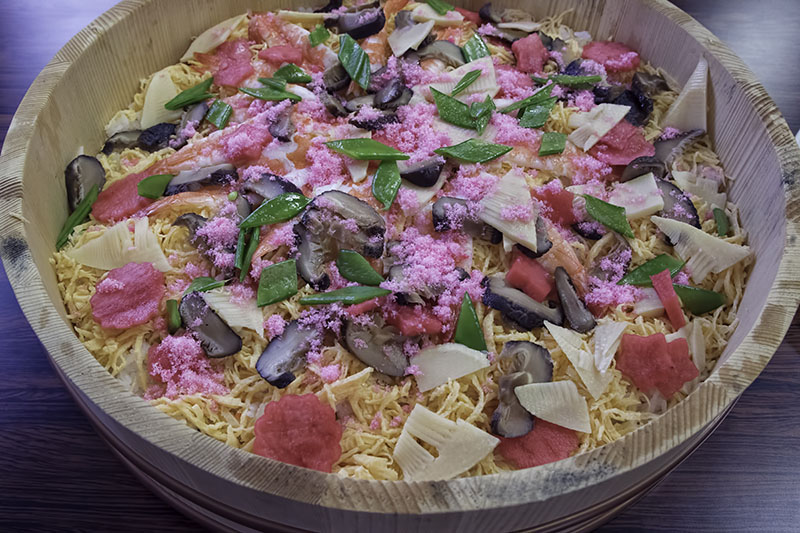 “scattered” sushi which is shown in the picture. It consisted of a vinegar rice base with thinly sliced scrambled eggs, radishes, shrimp, mushrooms, dried bonito flakes (that’s the pink stuff), and snow peas. I think this was also the one where they stirred the baby fish into the rice before-hand. Anyway, it tasted really good. They also demonstrated making miso soup.
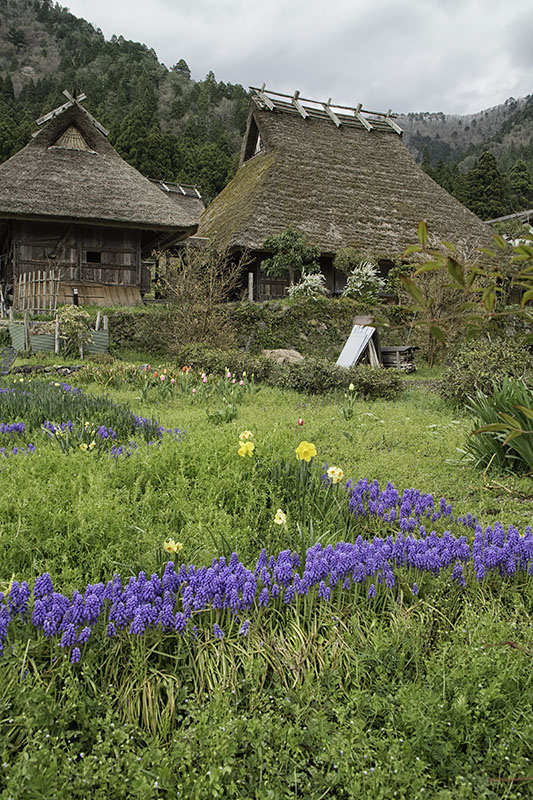 After lunch we went just down the road to tour the village which is one of only a few remaining towns featuring thatched roofs. Our guide was a craftsman who specializes in repairing thatched roofs. Except in special circumstances new houses are not allowed to have thatched roofs but maintaining old ones is encourages by government subsidies. While at the village we had an opportunity for a short visit to an Indigo museum with a demonstration from the artist who owns and operates it.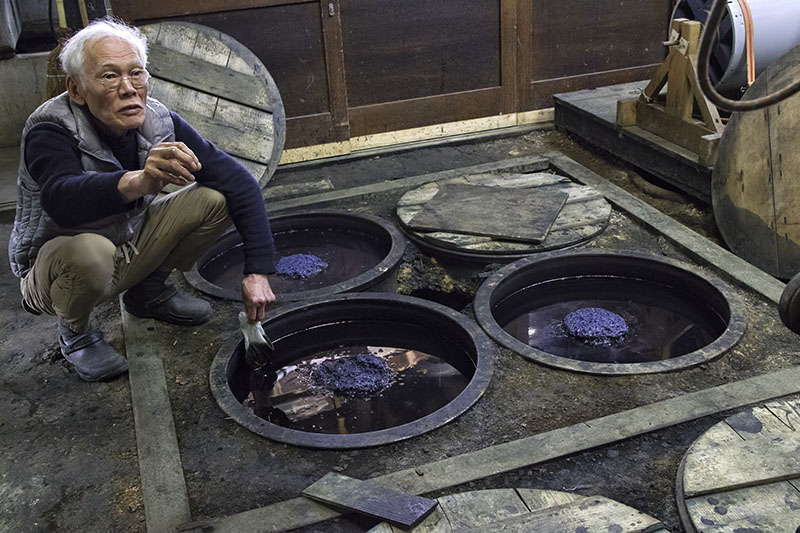
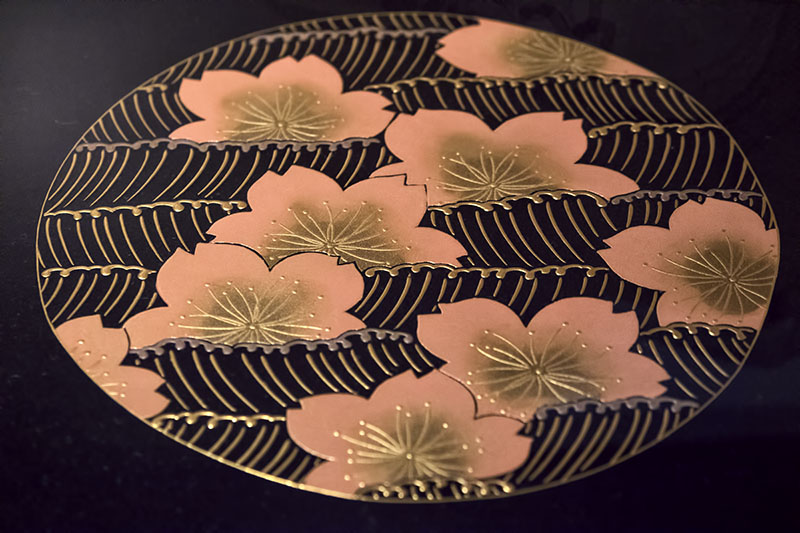 boarding the bus we experienced, all in the space of five minutes, snow, rain, sleet, hail, thunder and lightning. Our guides had to scramble around and find an indoor activity to substitute for our walk through the samurai quarter. Instead we went to the Museum of Folk Art which was interesting enough. I especially liked the highly decorative lacquerware.
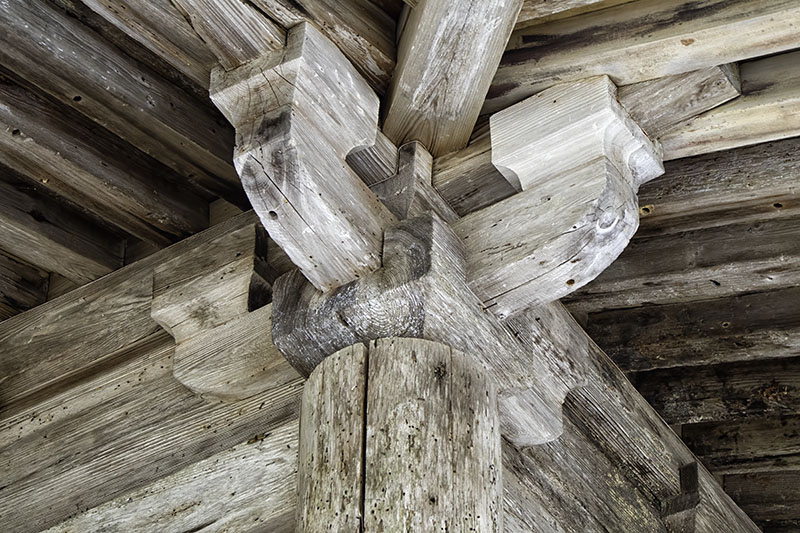 century. We were not allowed to take pictures inside, but the thousand-armed Buddha statue was impressive. What was also fascinating was that the building was built without nails. This closeup shows the detail of how the wood pieces are just fitted together like Lincoln logs.
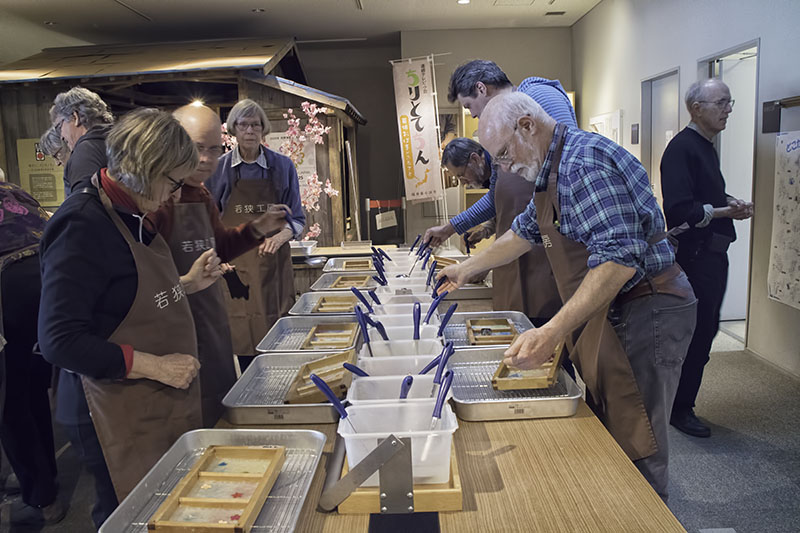 Once in town we dropped our luggage at the hotel, said goodbye to the bus and walked to our next appointment at a food museum. Here we had a craft lesson in making paper and later looked at all the plastic models of Japanese food.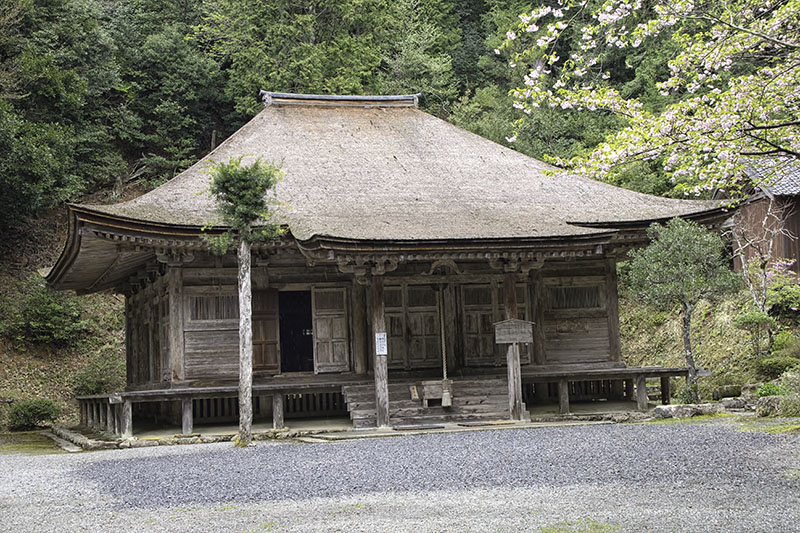
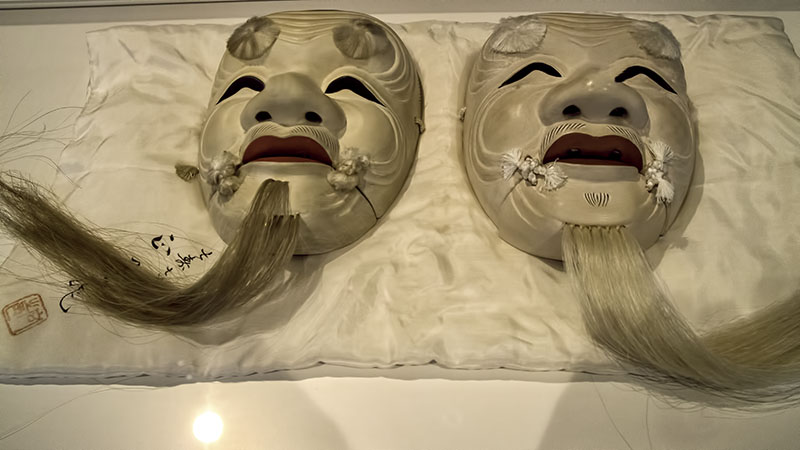 earnest. But we piled into 8 taxis for the transit to our destination. First stop was a brief look at the 21st century art museum, a round structure with pant legs and sneakers gracing its support columns. There was also an interesting elevator on a hydraulic lift. However, we were really just killing time until the Noh museum opened. Here we got a look at some masks and robes. All very elaborate, as well as a model of a typical Noh theater. We will be h
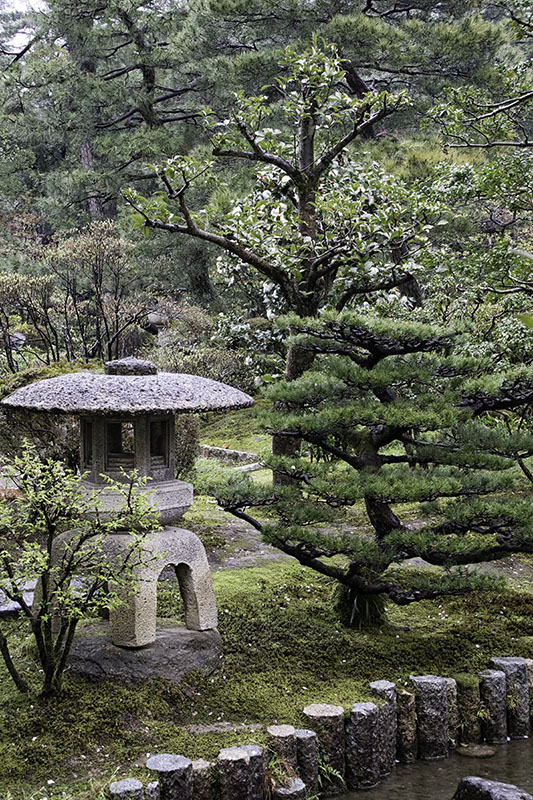 aving a full-blown lecture and demonstration of Noh later on, so I won’t go into details just now.
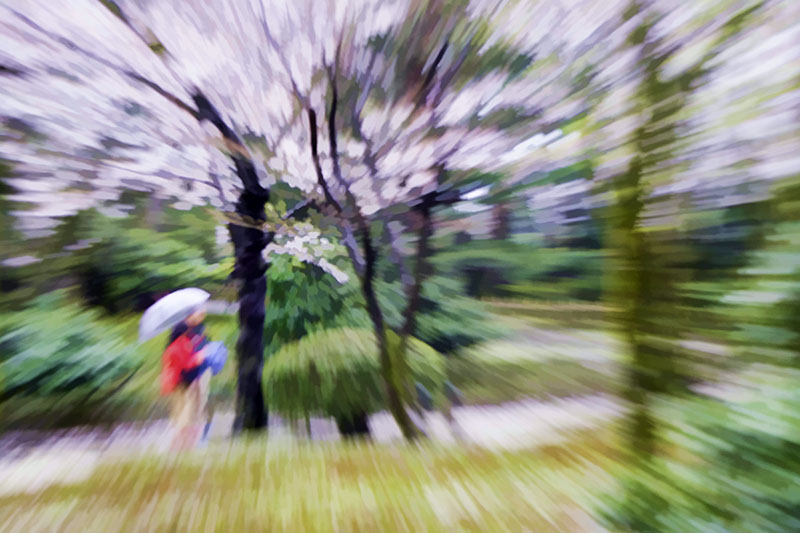 the park at a pace more leisurely than befitted the weather. Once while waiting for people to use the restroom I decided to get creative with the cherry blossoms and umbrellas. When we came to a decision point about whether to grab a taxi back to the hotel or stroll on to the fish market I decided what I wanted most was not to be miserable anymore, so I had to take a pass on the market.
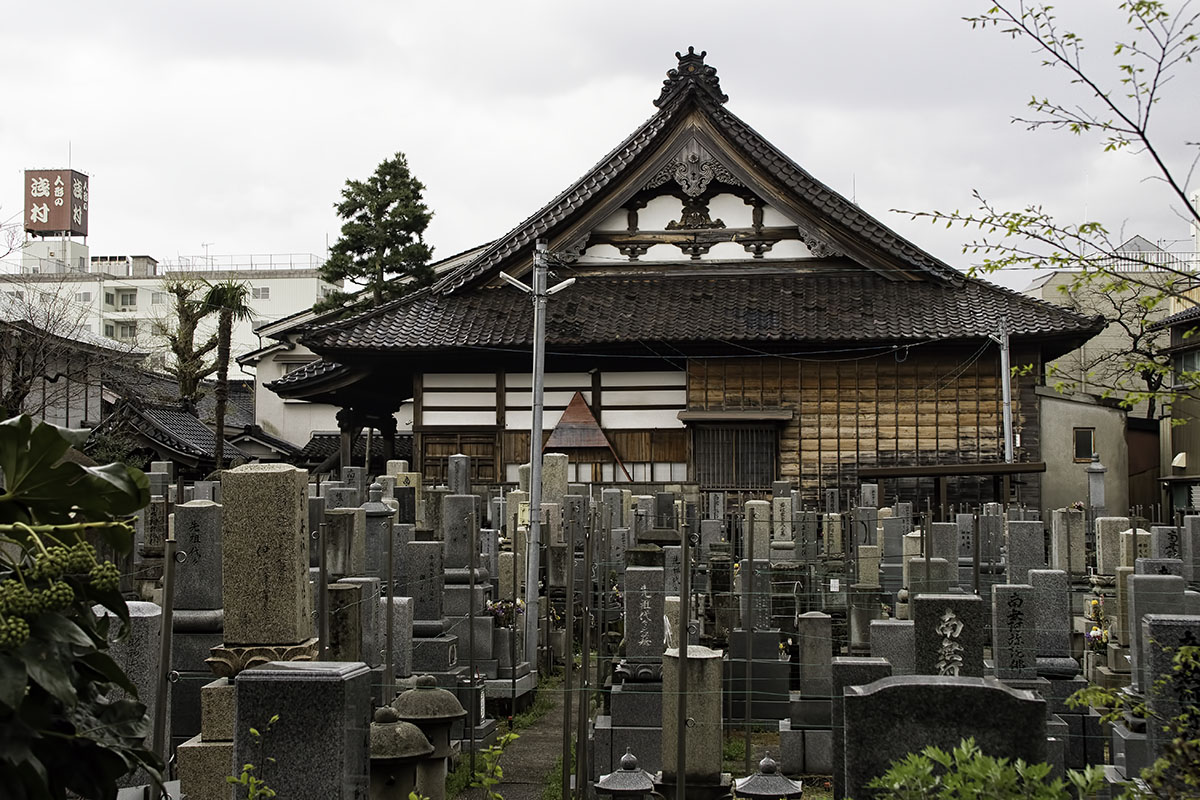 Buddhist Temple I had spotted on the map, not too far from the hotel. So, I walked the few blocks in the right direction it turned out and found not only the temple but this scenic graveyard. I hesitated to go in because I didn’t really know the protocol and by this time the clouds were gathering again and I was regretting the three glasses of tea I had at lunch. So, I started hurrying back to the hotel. Just as the thunder roared, a downpour started, and I thought I was going to pee my pants there in front of me appeared a lone porta-john. I ducked in and took care of business and by the time I came out the downpour had tapered off. We’ve been talking about unemployed angels at church lately, I guess one must have been watching out for me.