We gathered in the lobby of our airport hotel in Miami at 3am in preparation for our 6am flight to Santiago de Cuba. Fortunately we had a “handler” to guide us through the process of checking in, checking baggage, filling out forms including our visas and paying the fees required to get our luggage on the plane and ourselves in and out of the country. It was interesting to see our fellow travelers checking boxes of TV’s, appliances, and heaven only knows what as if they had just been to Miami to do their Christmas shopping, though I have a hunch the black market may have been getting in supplies as well.
It is still unclear to me whether Cubans are restricted from travelling or whether the cost is just prohibitive for most of them but I believe these folks were mostly Cuban Americans going to visit relatives. We were later told by our guide that the largest group visiting Cuba are Canadians, the second largest Cuban Americans and the third largest American tourists like ourselves with over a quarter of a million non-Cuban tourists from the U.S. expected to have made the trek during 2016.
We made it to the gate by 5am and boarding came shortly thereafter. The plane was only a half hour late getting off the ground which I guess is good for “Cuban” time. We arrived at Jose Marti Airport in Santiago around 8. Getting through customs was not too bad but then the nightmare began. Apparently due to Castro’s funeral, airport security had been tightened and we had to go through security to get out of the airport. The line was jumbled at best, there was only one scanning machine and people kept jockeying for position and looking for friends to move them up in the line. Finally, an hour after deplaning we were through the line. I think I was one of the last ones through. I had watched my suitcase go round and round the conveyor belt so at least I knew I had luggage even though I could not get to it. Next we went out the door and around the corner to change our American dollars into CUCs, a sort of monopoly money just for tourists that is separate from the real Cuban money supply. I understand there is a movement to change this so there is only one money system. All of our transactions had to be in cash because while Cuba does have ATMs and credit cards, American banks are not yet recognized.
We were whisked away to breakfast in a private home where our local guide explained to us that due to the high demand for hotel rooms by dignitaries and journalists we had been bounced from not one but two hotels and would be staying in Casas. These are rooms in private homes, som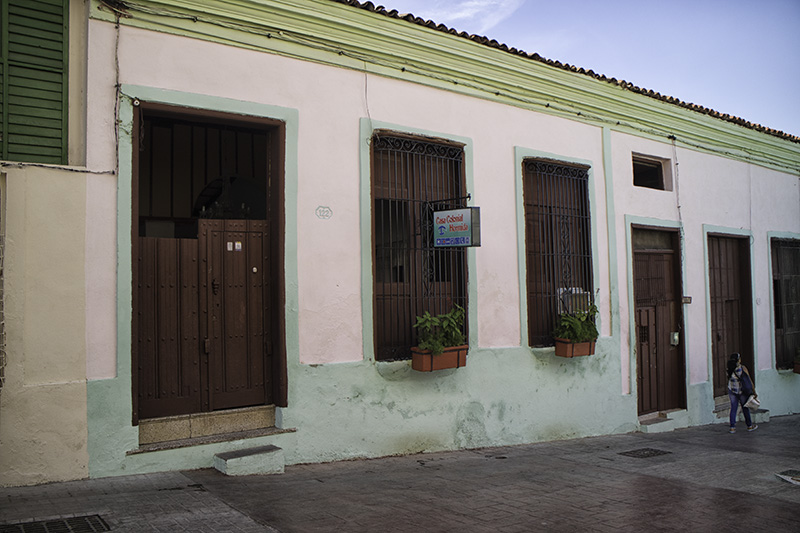 ewhat on the order of a B&B. From some of the stories others were telling, I got lucky, my room had air conditioning, hot water and American style plug ins, a private bath and a little room with a table and refrigerator. Many in our group were complaining about plumbing and electricity being dysfunctional. Here is a picture of the outside of my Casa.
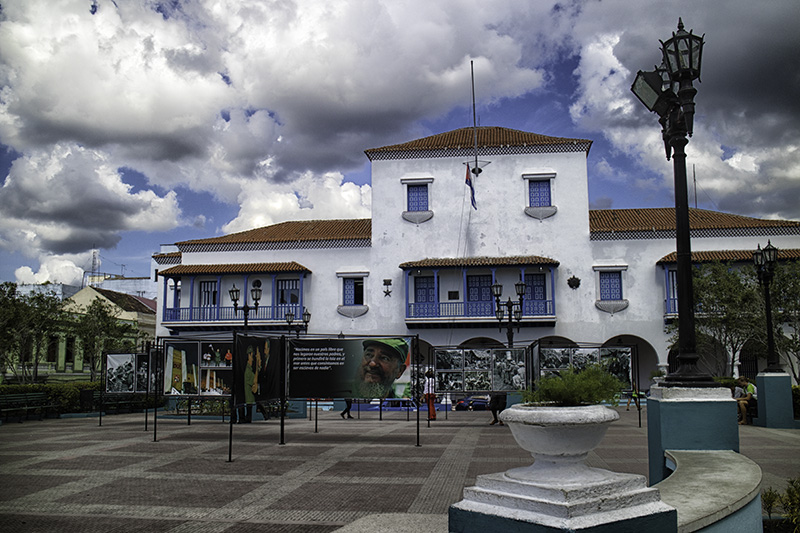 So, after a short rest we proceeded to Parque Cespedes where Castro‘s ashes would be on display the next day. There were displays with pictures of Castro and loudspeakers apparently broadcasting some of his speeches. He was famous for his two or three hour orations. The Parque also features a beautiful Cathedral dating to the 16th century.
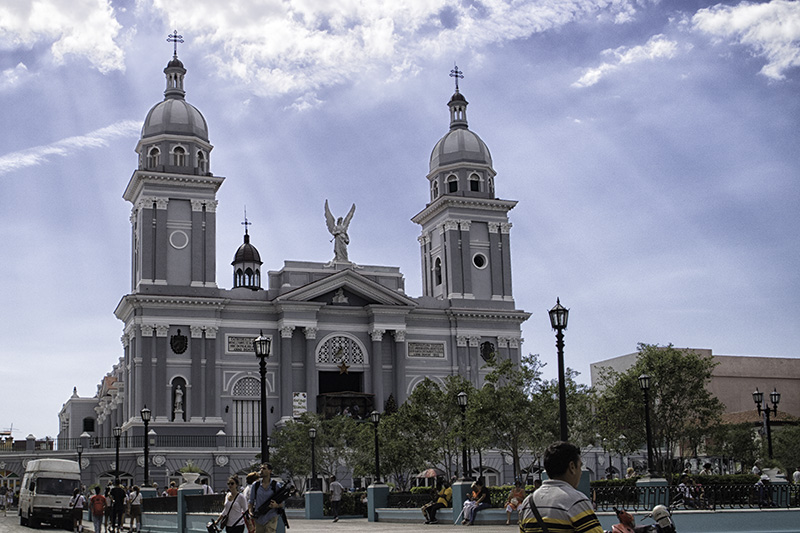 I’ll say more about religion in Cuba in a later post. The Parque, which is really just a large square is named for Carlos Manuel de Cespedes who is considered the founding father of Cuba. A large plantation owner, Cespedes freed his slaves in 1868 triggering the first revolution, a war for independence from Spain. Across from the Cathedral is the town
 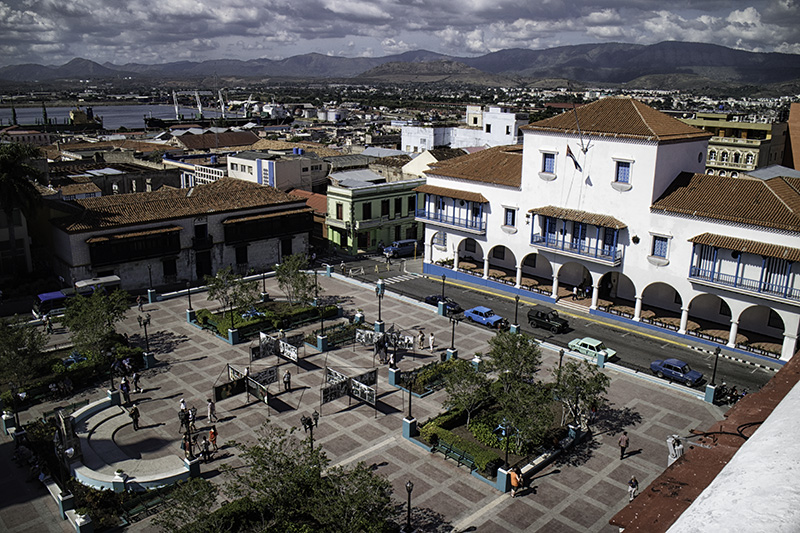 hall where Castro made his first speech to the Cuban people on January 1, 1959.
We were left free to wander for three hours and I was exhausted after about one but got many nice images of the colors of Cuba. I sat for a time on a doorstep with photography guide Nancy Ori (www.nancyorifineart.com) and as she suggested the photos just c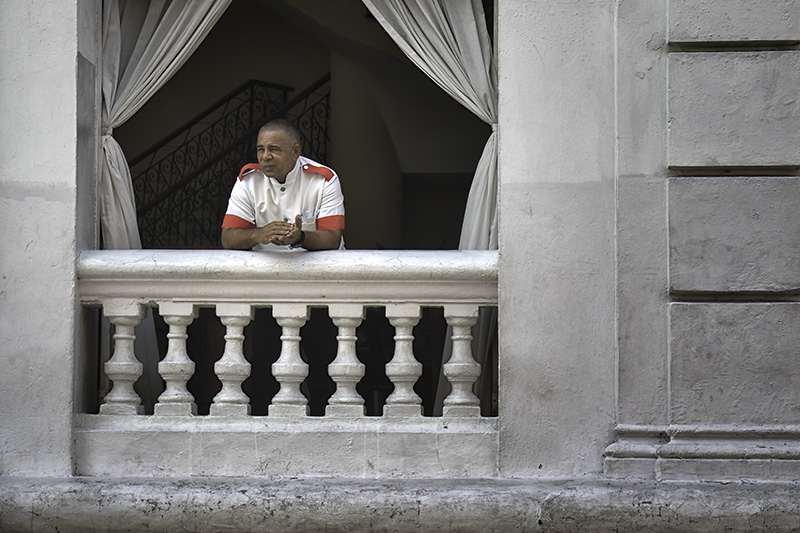 ame to us. Including this one of a hotel worker looking pensive just across the street from where we were sitting.
There are old cars in Santiago but not as many as in Havana because 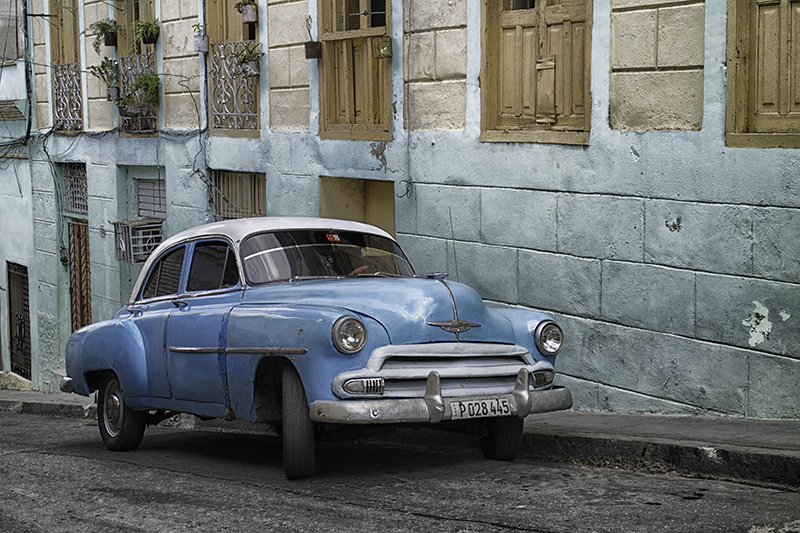 they have a hard time negotiating the hills in this town. I suppose it is fitting that the first picture I took in Cuba
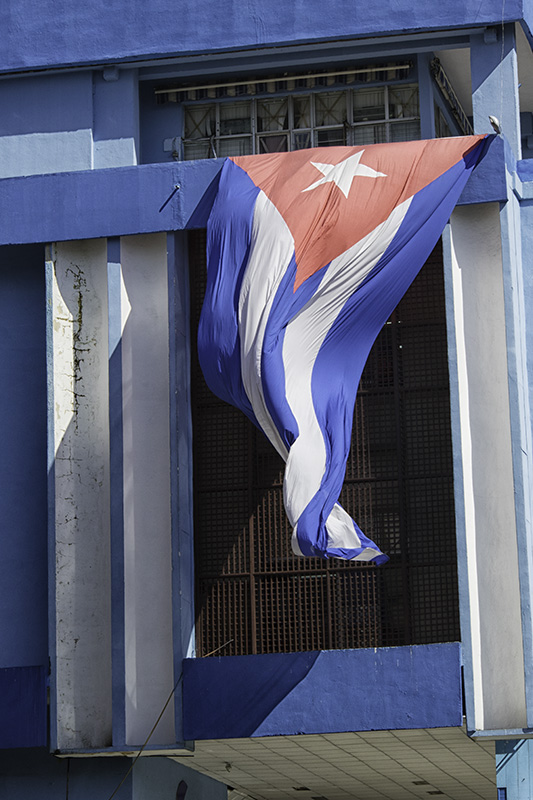 was of this old car. Cuban flags were flying everywhere and people with brooms were tidying up for the big event. Because the country was still in mourning we (and everyone else) could not purchase alcohol and there was no live music allowed. Th
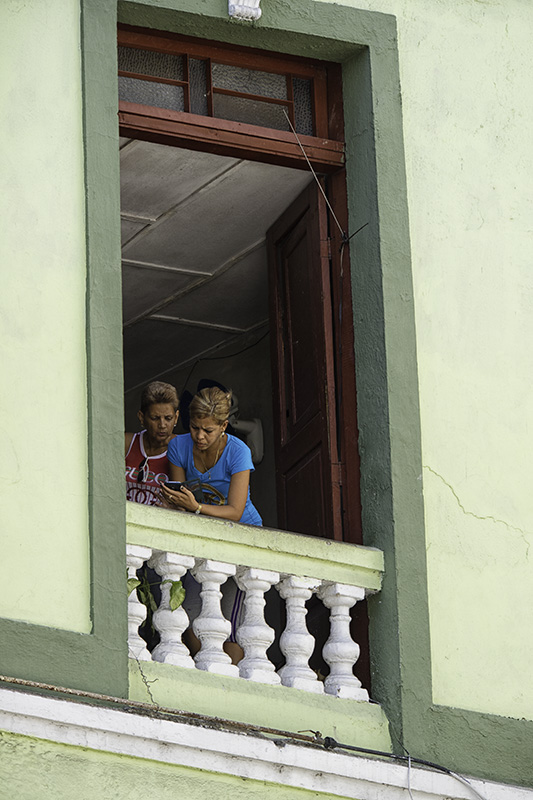 e Parque also serves as a wifi hotspot and people in our group who had been to Cuba before noted that one of the
biggest changes they saw was the widespread presence of cell phones.
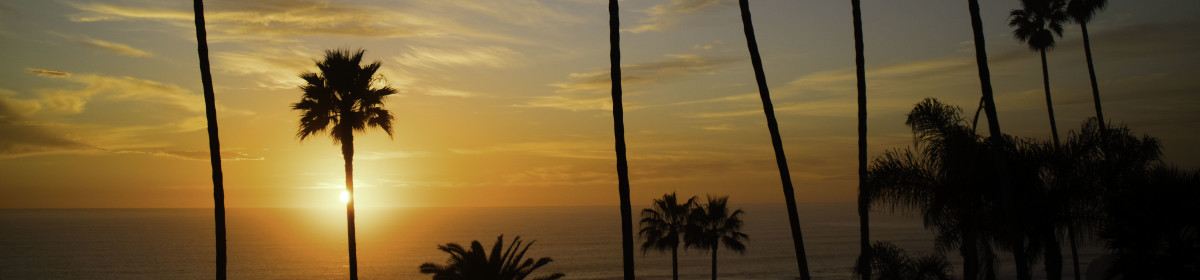
In the late afternoon we hopped on the van (gratefully I might add) and were driven to Castillo del Morro Don Pedro de la Roca, an old fort overlooking the Caribbean sea which was designated a UNESCO World Heritage Site in 1997. The fortress dates from 1638 and was 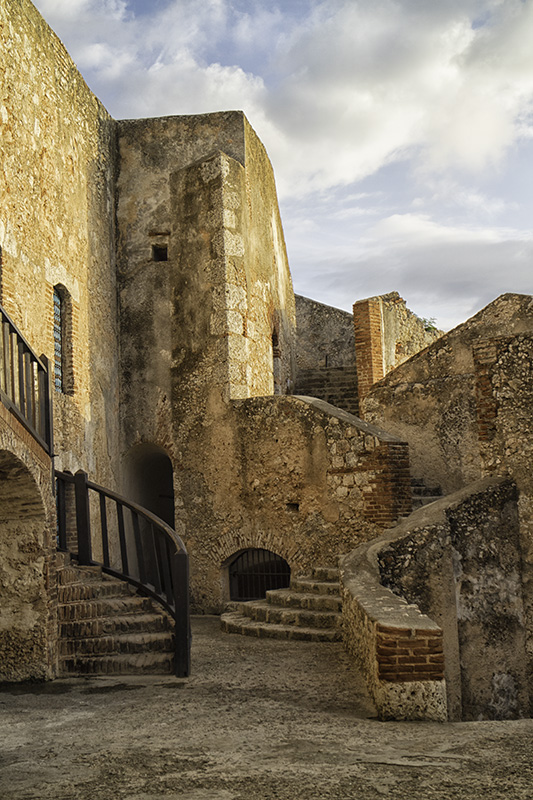 constructed to defend the city from pirates. Unfortunately, all the interpretive signs were in Spanish and our guide wasn’t into interpreting so most of what I know I learned from my guide books after I got home. We stayed for sunset and witnessed soldiers in period dress marching into the castle to fire a canon as the sun went down. Our first dinner was at a government owned restaurant near the fort. We were served family style, fish, chicken and pork, soup and canned beans and beets, rice, french fries, and chocolate ice cream.


I made it back to my casa around 7pm, downloaded images and made notes on the days activity. Then took a cool shower and fell into bed.
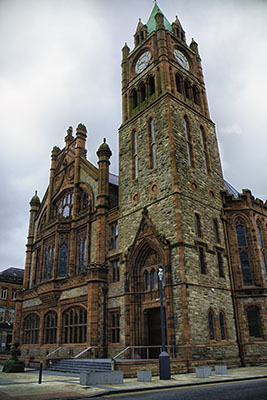 We started this morning with a walking tour of Derry. Here is a shot of the beautiful city hall. I suppose since I am a protestant and of British decent I should call it Londonderry but I am also a champion of the underdog and I’m convinced the Catholics have gotten a pretty raw deal over the years so I’m going to side with them and call it Derry. Our guide told us the town took the name to court recently and the Judge threw up his hands and said “I’m not getting in the middle of this.” So they muddle through with the dual name.
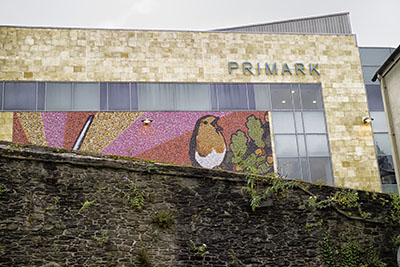 uld remember for a long time, and apparently those memories and resentments played into the “Troubles” of the 20th century. The other event, Bloody Sunday, I’m a little more sympathetic about, maybe because it happened in my lifetime (1972). Maybe because it was all about 13 civil rights marchers getting caught in the cross fire during the “Troubles.” Maybe because apologies
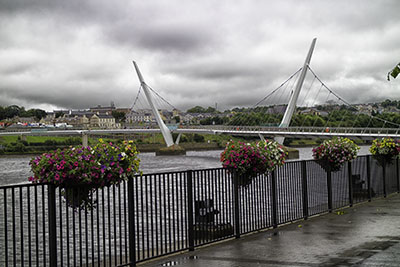 Culture” in 2013. Here is a picture of the peace bridge opened in 2011 and financed by the EU. It has been made very clear to us that Northern Ireland did not vote for Brexit, has benefited greatly economically from being part of the EU and hopes the whole thing will be turned around.
 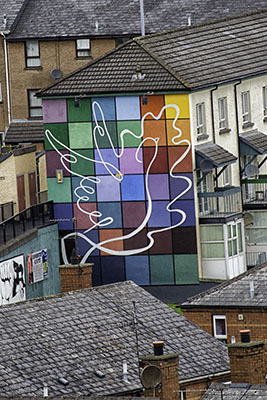 Derry also has its own set of murals regarding the troubles but my favorite was the dove rising out of the darkness into a brighter future.
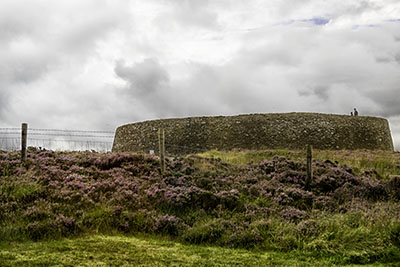 climbing to the top. The views were spectacular but getting down again was a bit tricky for an old fat woman. Notice the heather that was blooming on all the hillsides.
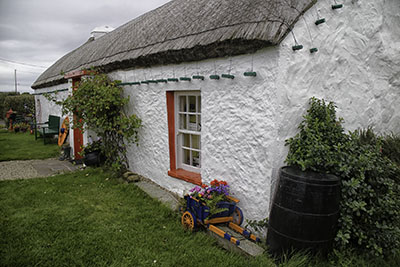 head which is not only the northernmost point in Ireland but the location of the shooting of the latest star wars movie. We also got our first taste of thatched roof cottages and she
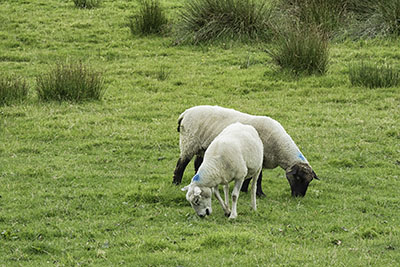 ep. And we learned all about peat bogs, of which there are a lot on the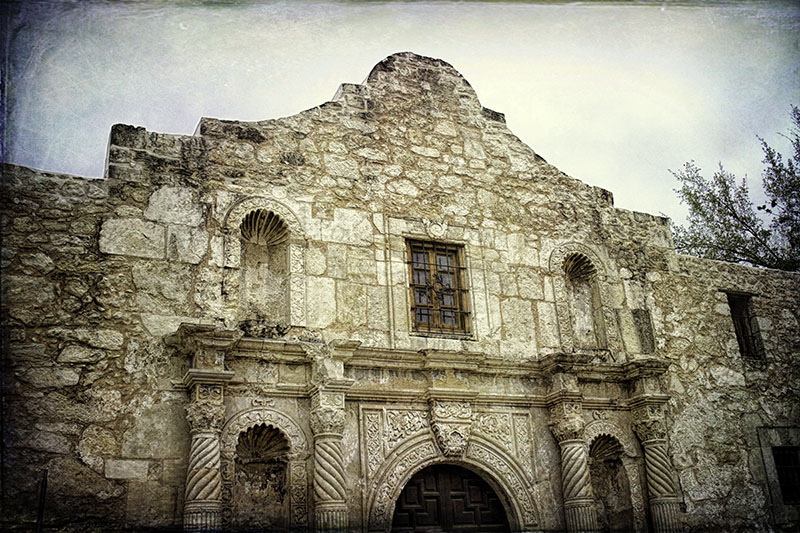
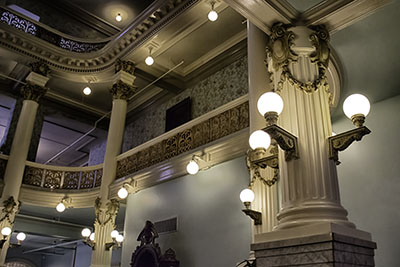 r when the ruined misson chapel was turned into a military supply depot.
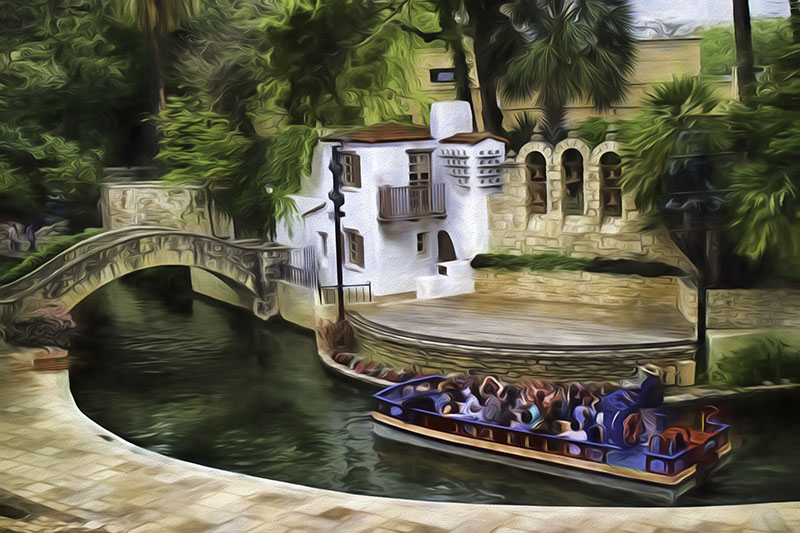 oceeded via trolley to La Villita an old neighborhood now turned into shops.
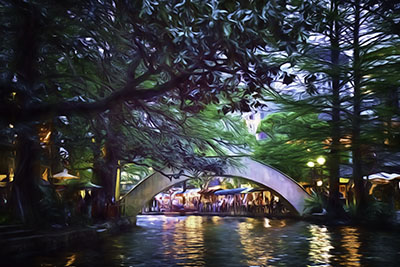 ime to put the dream into reality but the results are quite stunning. I did a painterly treatment to simplify this view of a barge passing by. Our own barge ride was at night and after dinner. The lights on the water make for lovely views.
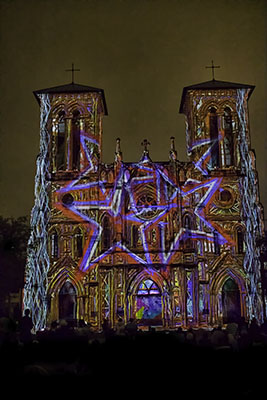 We ended the day at the San Fernando Cathederal where a laser light show projected on the face of the building provided another perspective on Texas history. I only wish I could share all the amazing views of the Cathedral I shot during the show.